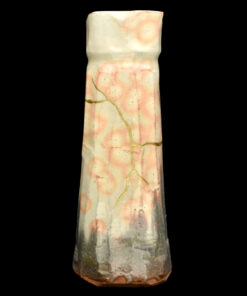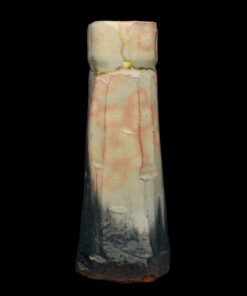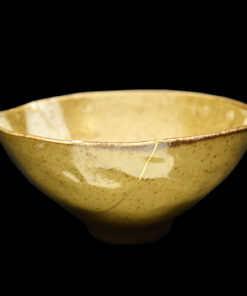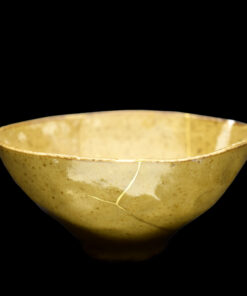
Antique Turquoise-Glazed Vase Restored with Kintsugi – 24-Carat Gold
1 620 CHF VAT excl.
In stock
For express shipping please contact us before purchase as prices are difficult to calculate automatically on the website.
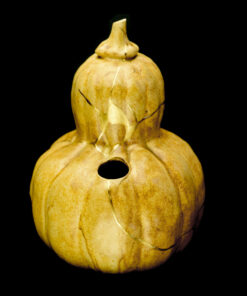
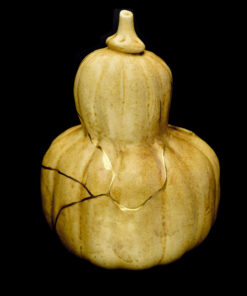
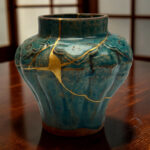
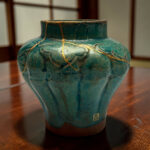
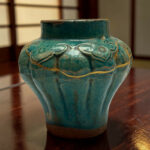
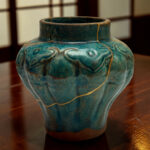
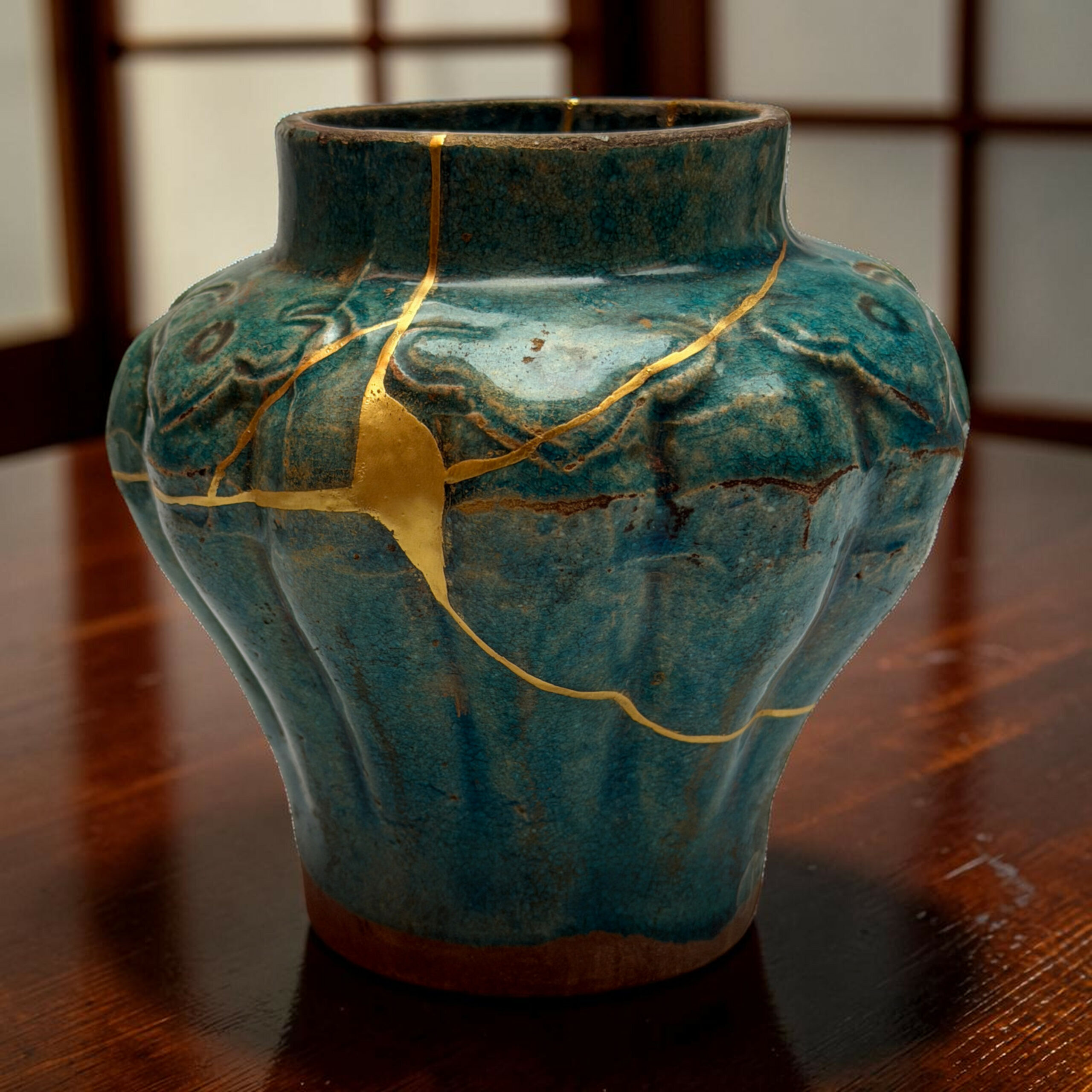
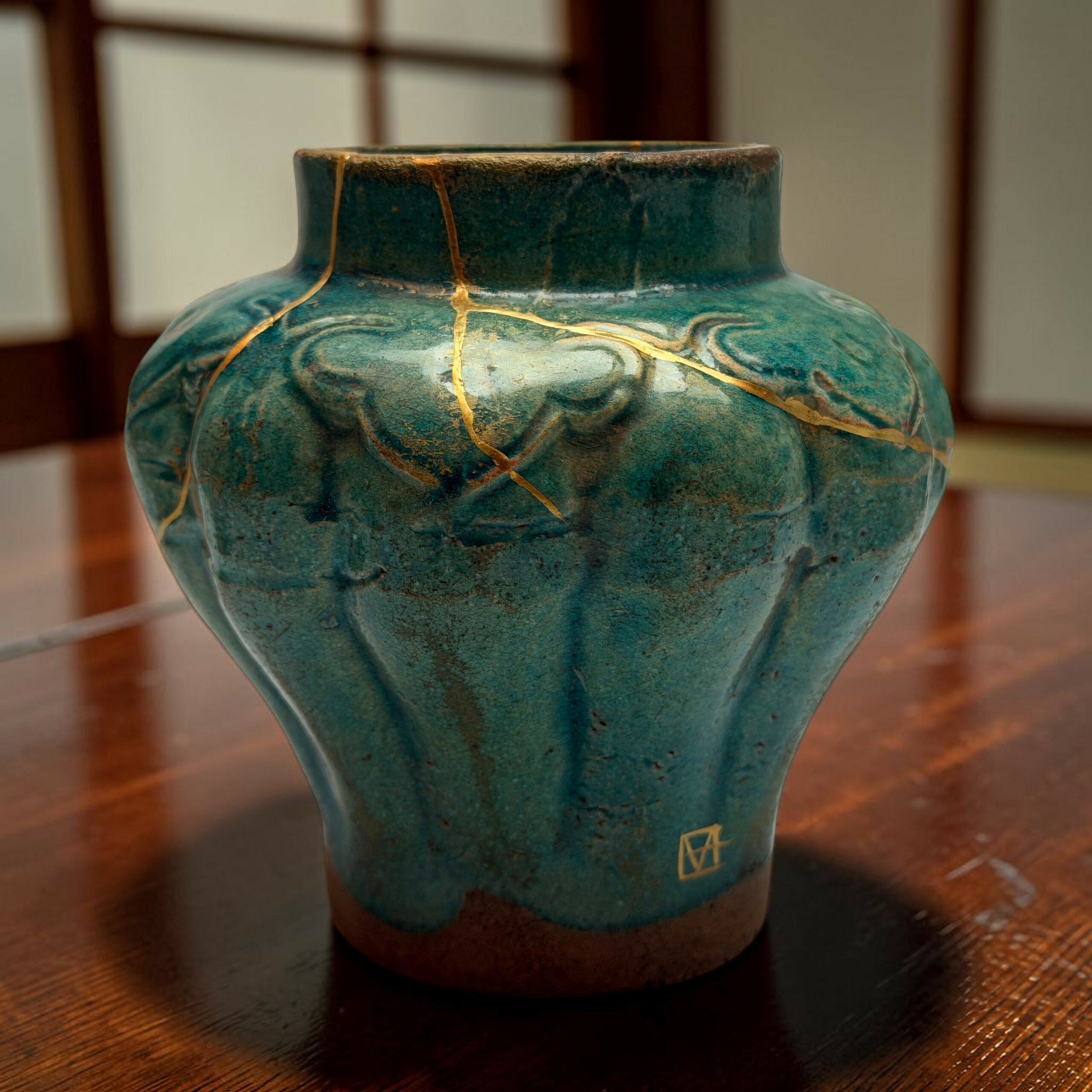
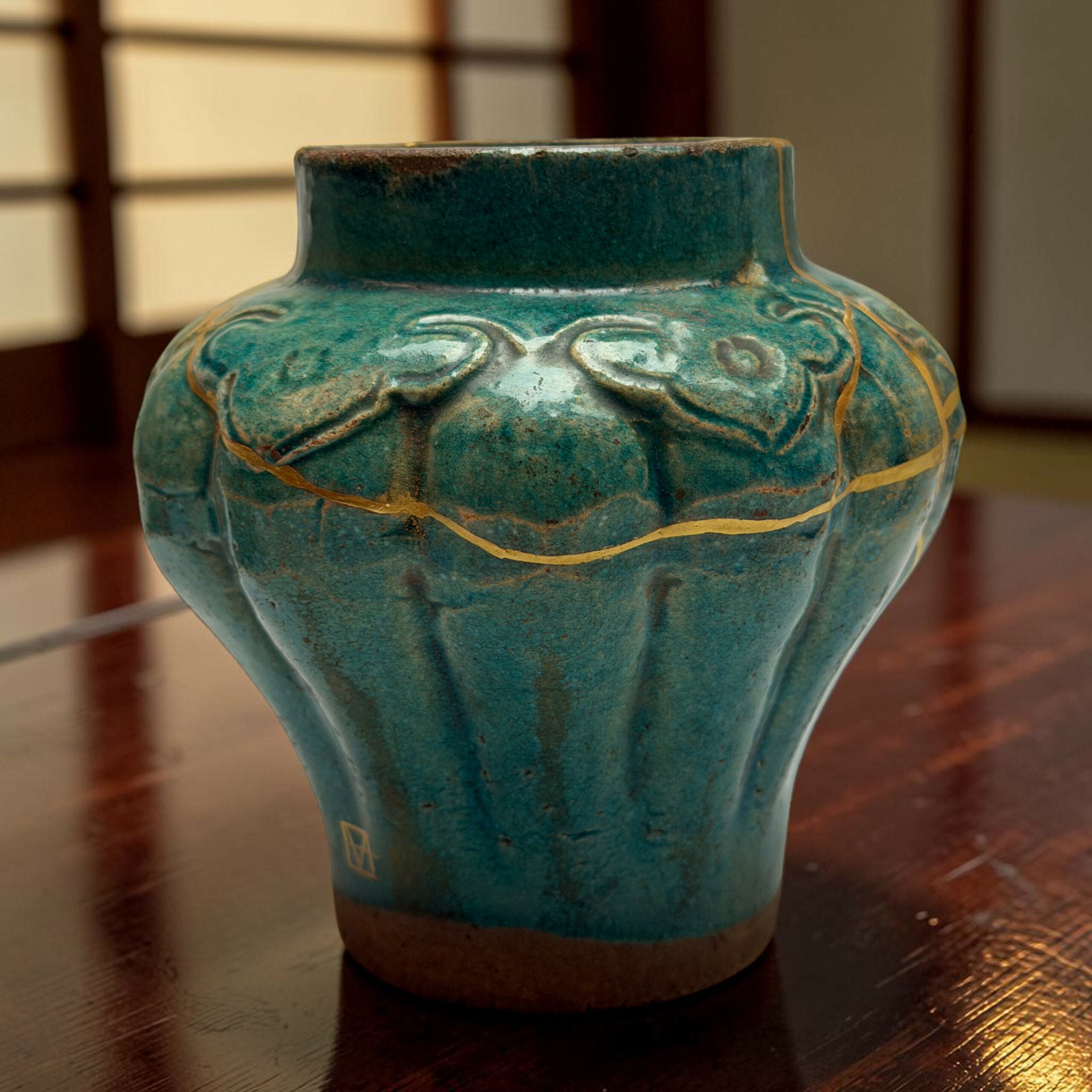
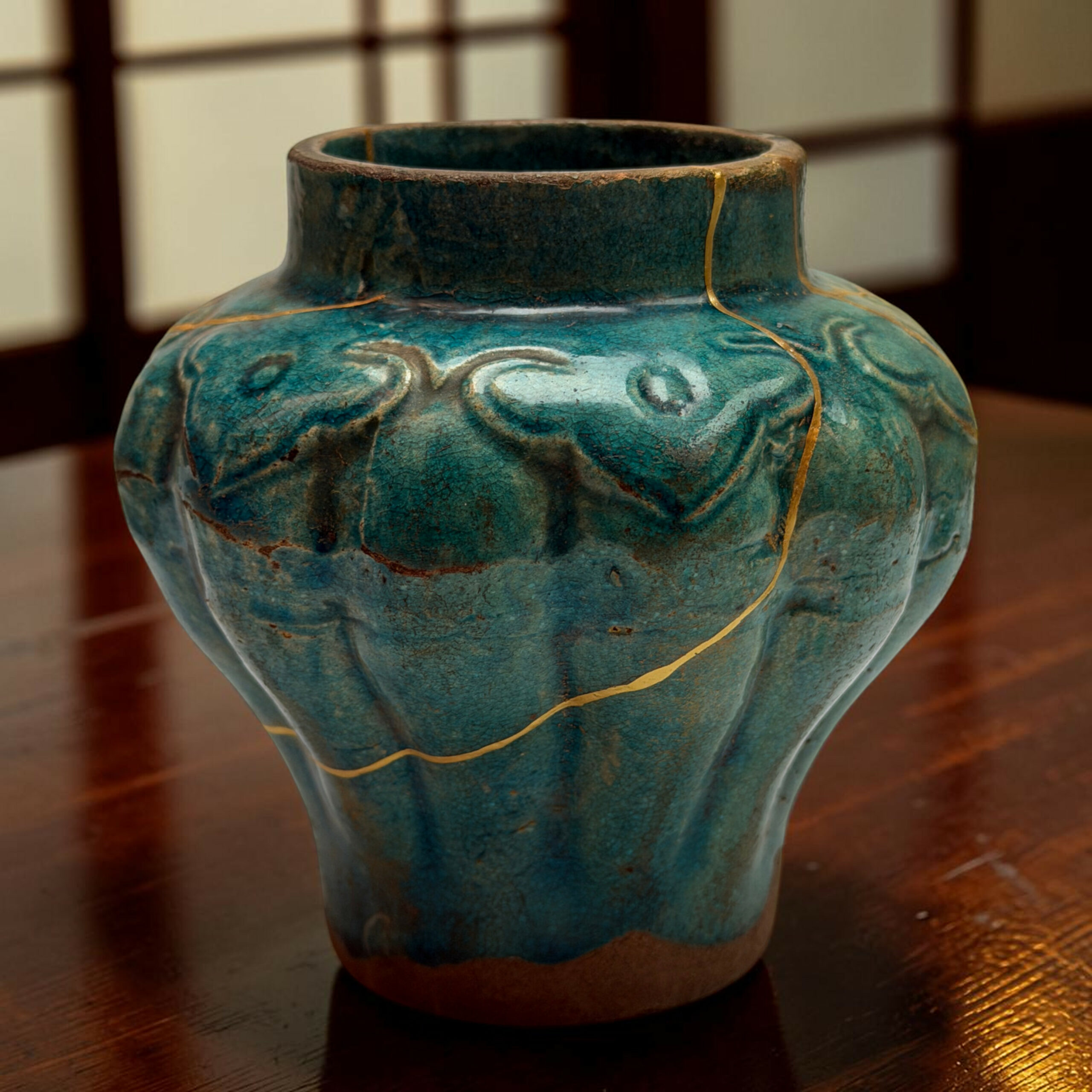
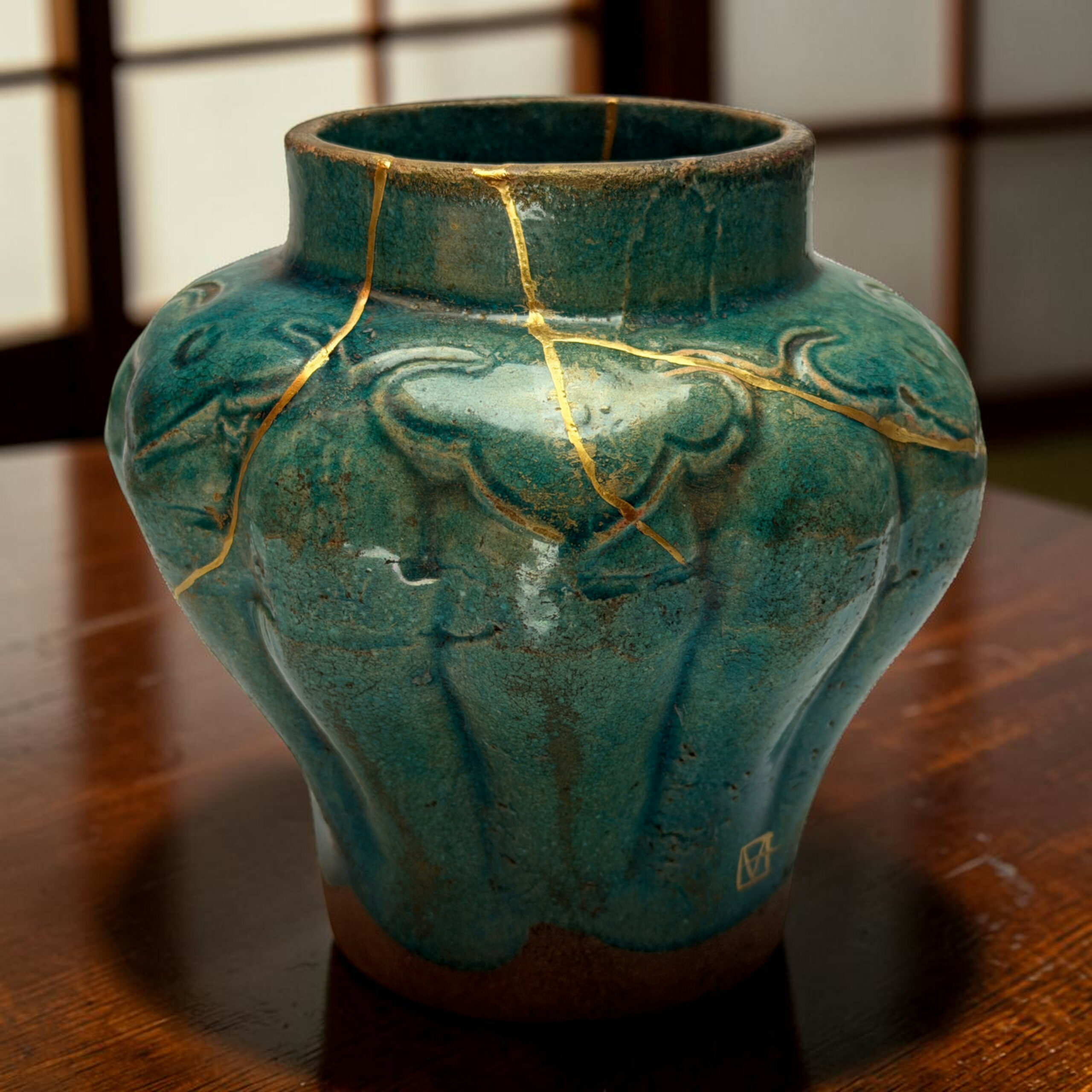
A small antique ceramic vase acquired as part of the same auction lot as the previous piece. Its distinctive form is structured by deep vertical fluting and a band of stylised zoomorphic relief motifs arranged around the shoulder.
The exposed beige-brown body has a sandy, granular texture, visible around the base and rim. Its appearance may suggest a silica-rich or fritware-type ceramic body, although material analysis would be required to confirm this identification. The vase is covered in a turquoise glaze with blue-green variations, delicate crackling, firing irregularities and visible traces of age.
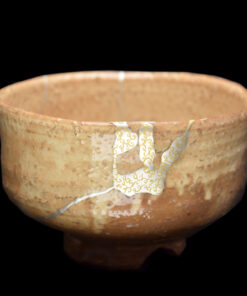
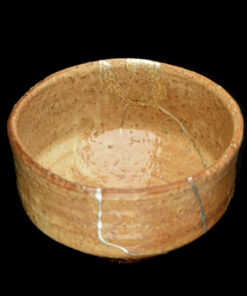
Its fractures have been restored using the traditional art of kintsugi, with natural Japanese urushi lacquer and pure 24-carat gold powder. The golden lines cross the raised decoration and redefine the structure of the vessel, creating a graphic contrast with the depth of the turquoise glaze.
A singular piece in which ancient relief, mineral texture and the radiance of gold come together.
Origin: undetermined, probably China
Estimated period: 18th–19th century, subject to specialist appraisal
Provenance: acquired as part of an auction lot
Material: ceramic with a sandy, granular body
Glaze: turquoise with blue and green variations
Decoration: vertical fluting and stylised zoomorphic relief motifs
Restoration: traditional kintsugi using natural Japanese urushi lacquer and pure 24-carat gold
Height: approximately 4.3 in
Unique piece
Care instructions: decorative object; handle with care. Clean gently with a soft cloth. Avoid abrasive products, dishwashers and prolonged soaking.
| Certificate of Authenticity | Provided |
|---|---|
| Color | Blue |
| Materials | 24 carats Gold, Ceramic, Silk, Urushi (Japanese lacquer) |
| Food Safe | Yes |
| Origin | China |