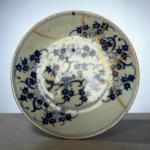
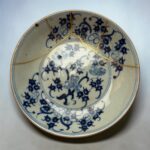
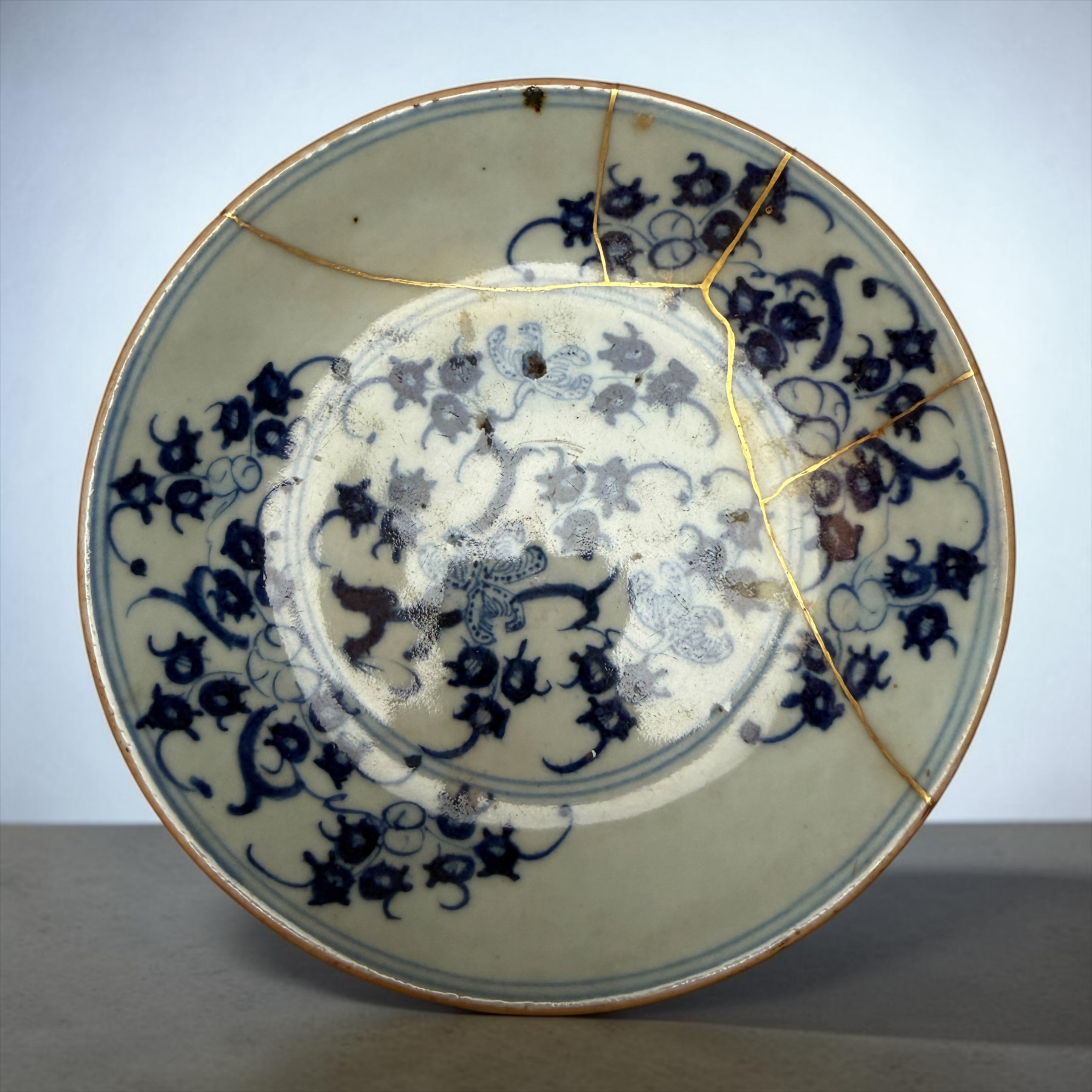
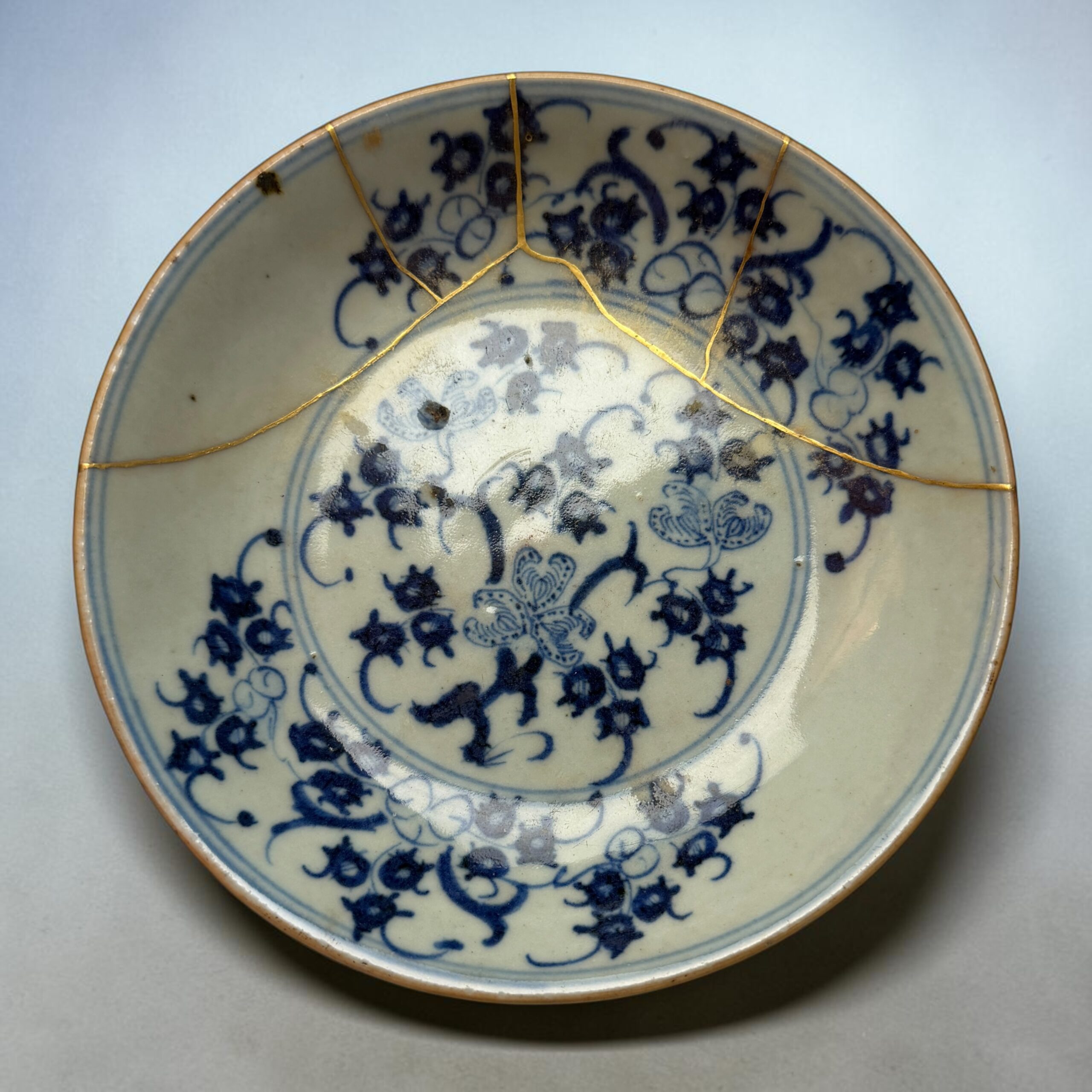
A small antique glazed ceramic dish, probably of Chinese origin, decorated in cobalt blue beneath the glaze.
Both the central well and the border are covered with an abundant design of stylised flowers and scrolling foliage. Painted in varying shades of blue, the motifs unfold freely across the ivory ground, creating a richly detailed, rhythmic and subtly irregular composition.
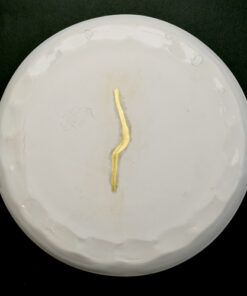
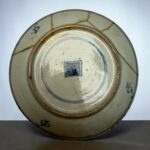
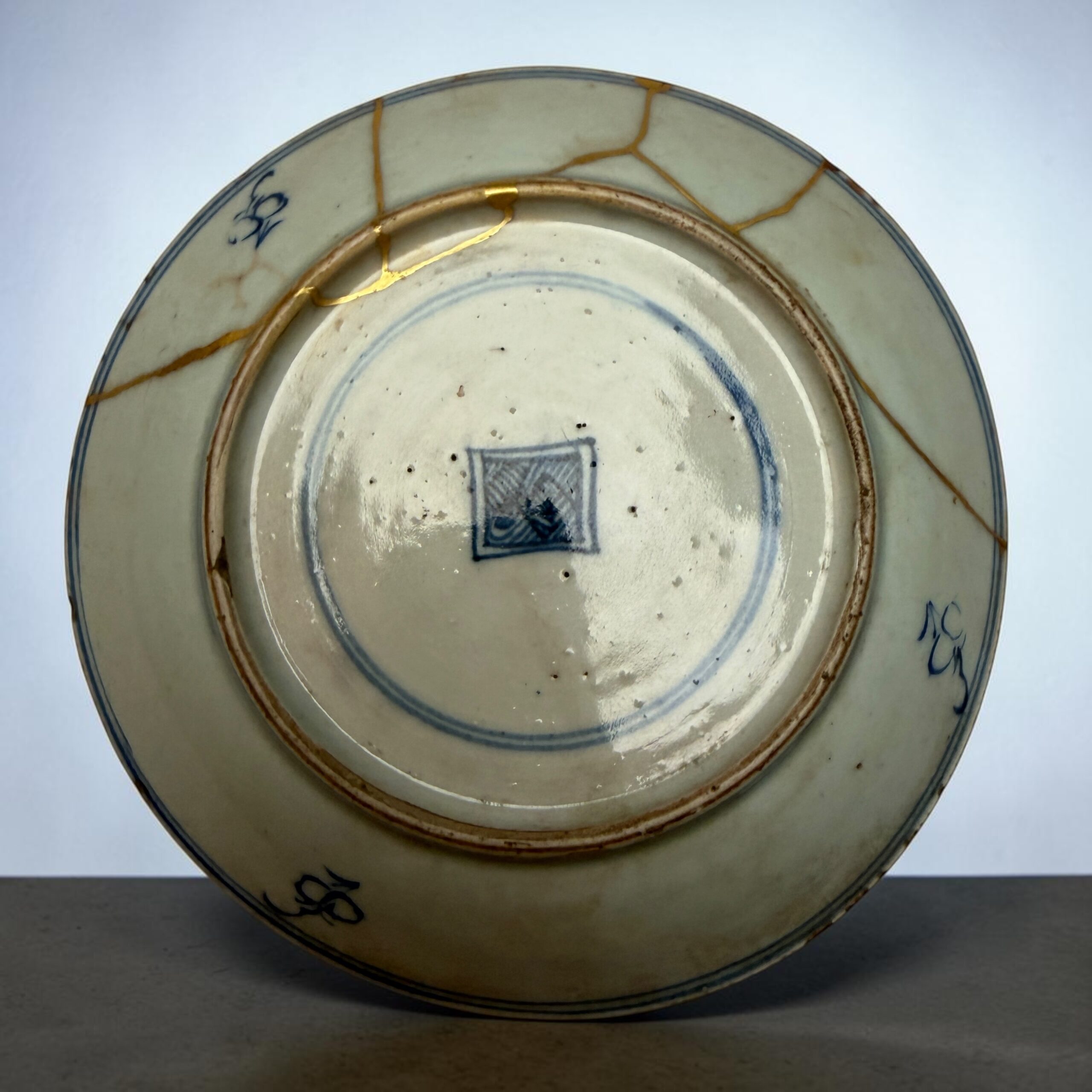
On the reverse, a square mark painted in blue appears at the centre within a double circle. Three small calligraphic or emblematic motifs are also arranged around the outer border. Their meaning remains unidentified and would require specialist appraisal.
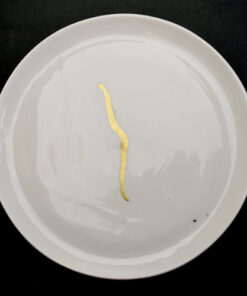
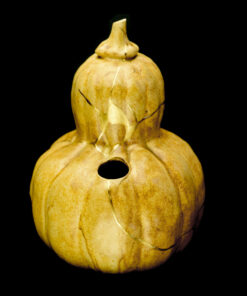
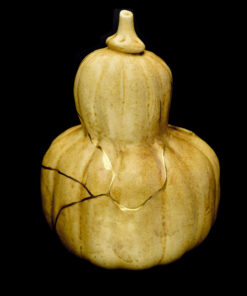
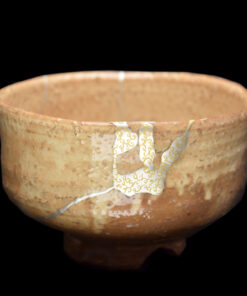
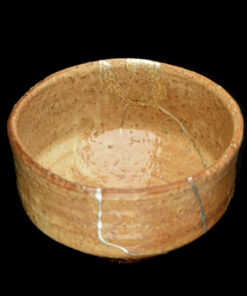
Its numerous fractures have been restored using the traditional Japanese art of kintsugi, with natural urushi lacquer and pure 24-carat gold powder. The golden lines travel through the floral decoration and redefine its rhythm, transforming every break into a new graphic element.
A distinctive antique piece in which the richness of cobalt blue meets the radiance of gold.
Probable origin: China, subject to specialist appraisal
Estimated period: 18th–19th century, subject to specialist appraisal
Type: small shallow dish
Material: glazed ceramic
Decoration: stylised flowers and scrolling foliage painted in cobalt-blue underglaze
Distinctive features: square mark on the reverse and three calligraphic or emblematic motifs
Restoration: traditional kintsugi using natural Japanese urushi lacquer and pure 24-carat gold
Dimensions: approximately 5.9 in diameter × 1.2 in high
Unique piece
Traditional kintsugi is suitable for food use once the lacquer has fully cured.
Care instructions: wash gently by hand only. Do not place in a dishwasher, oven or microwave. Avoid abrasive products, thermal shock and prolonged soaking.