Japanese Porcelain Hyōtan Gourd Vase — Traditional Kintsugi with 24k Gold
2 240 AUD $ VAT excl.
In stock
Request a private viewingPrivate Viewing
Japanese Porcelain Hyōtan Gourd Vase — Traditional Kintsugi with 24k Gold
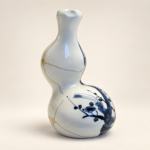
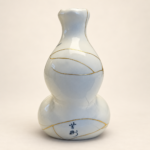
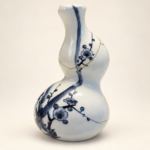
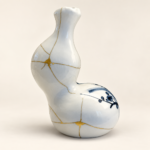
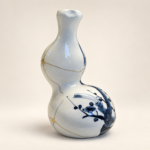
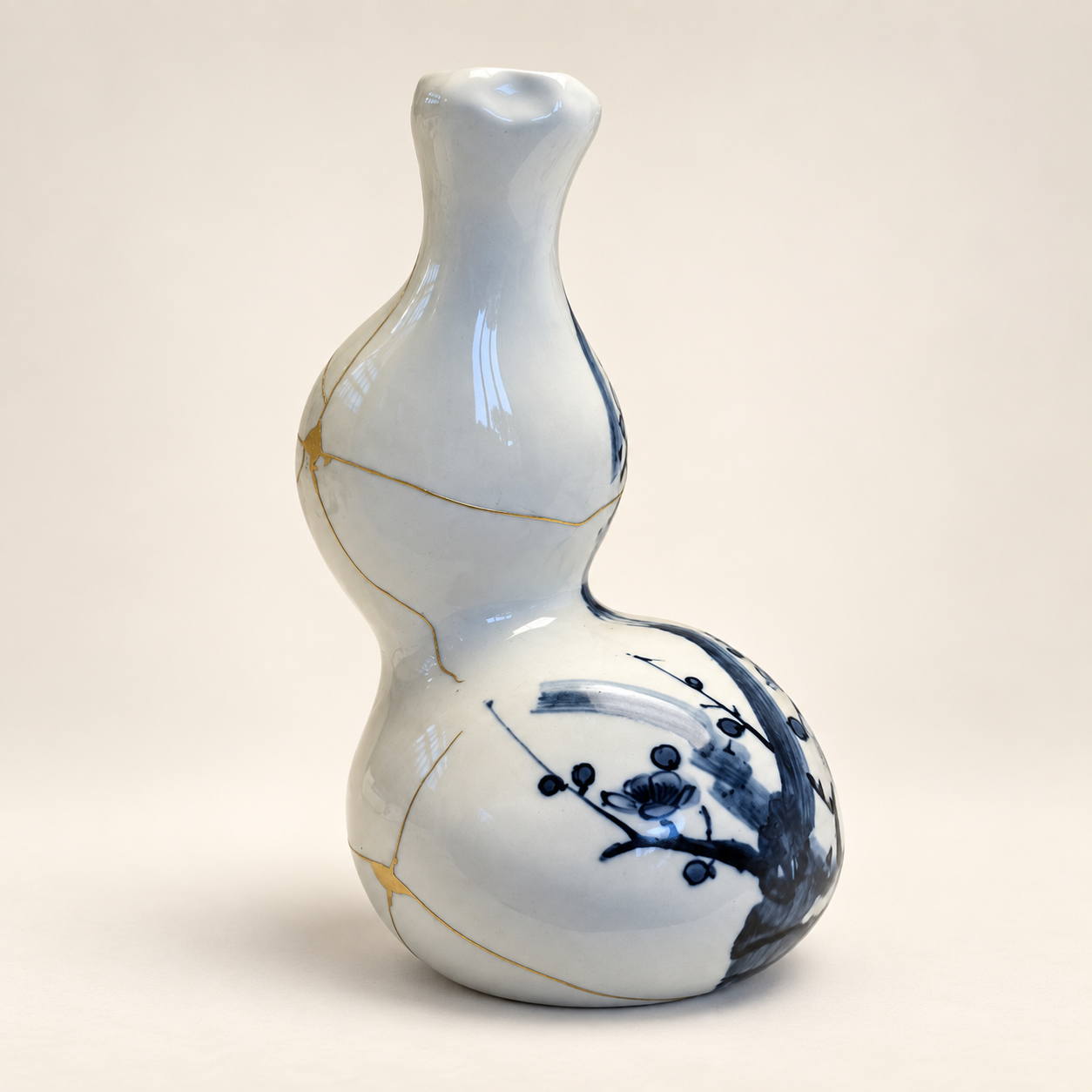
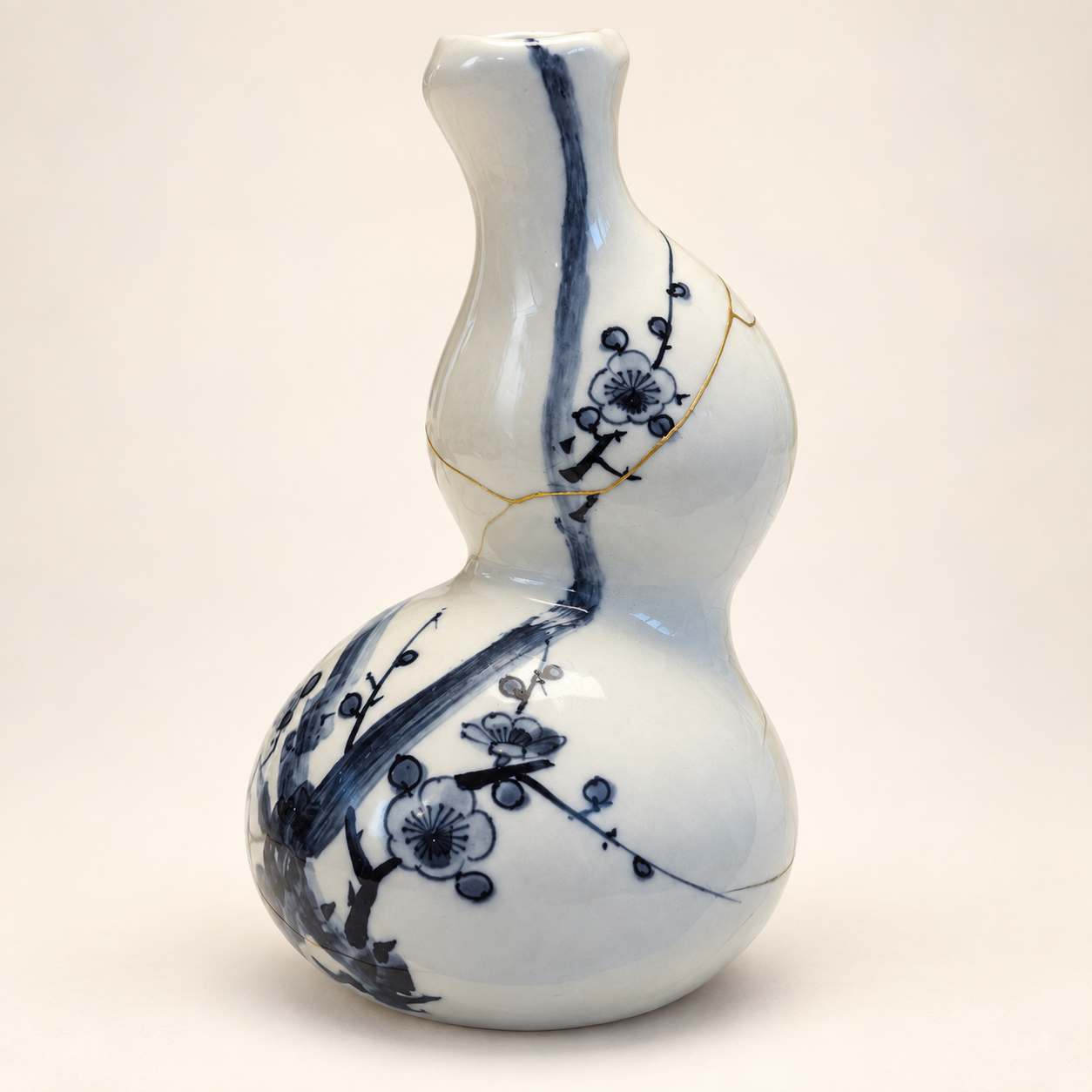
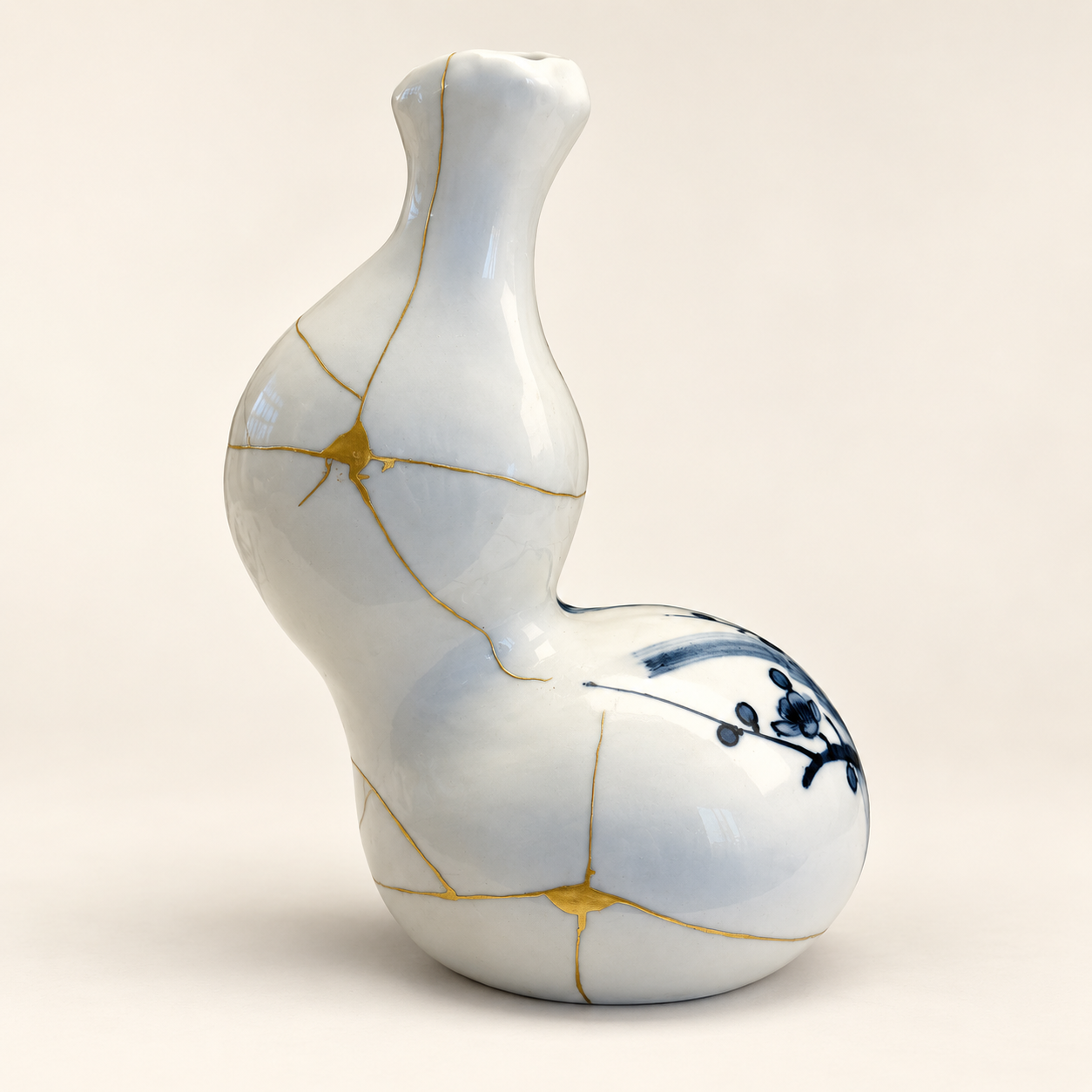
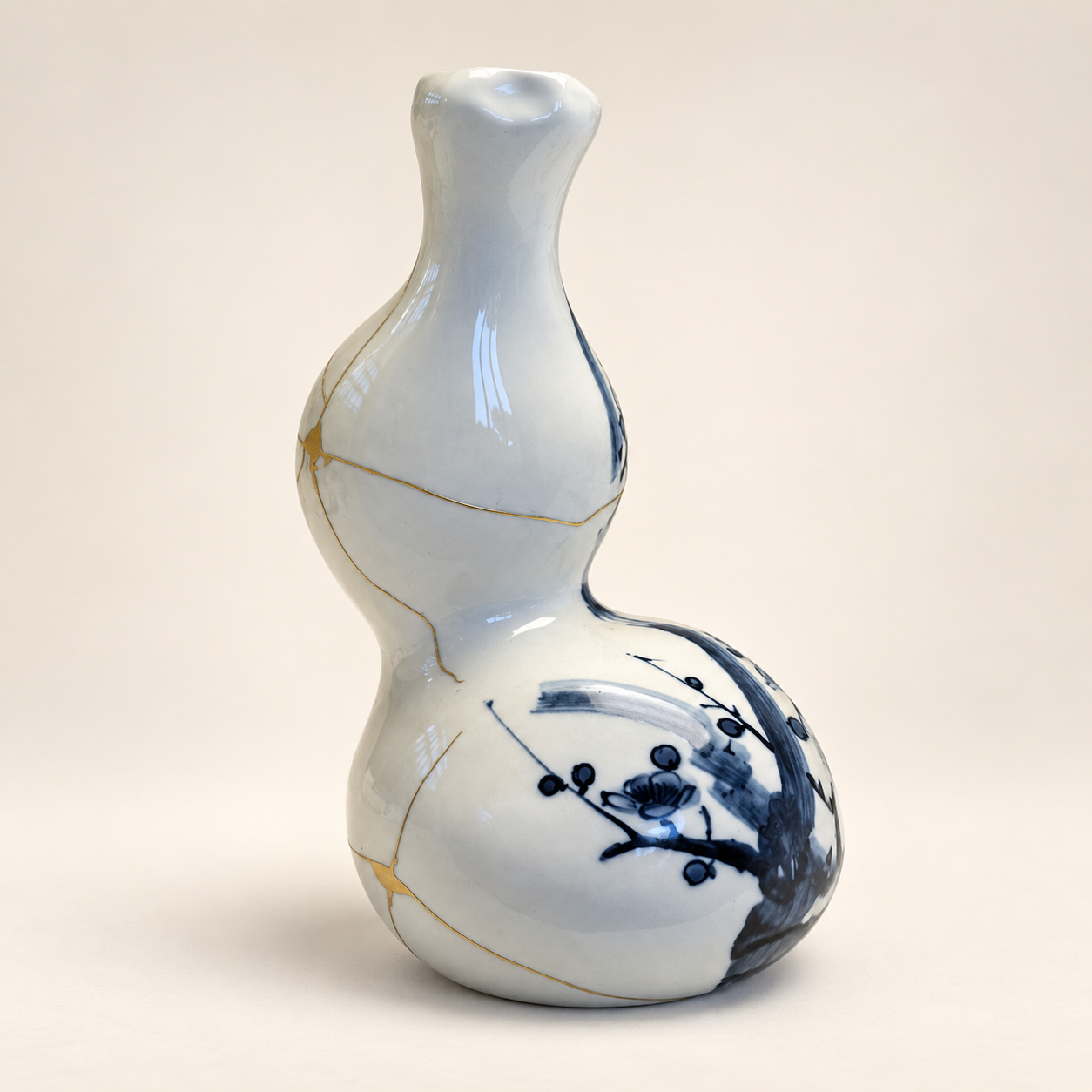
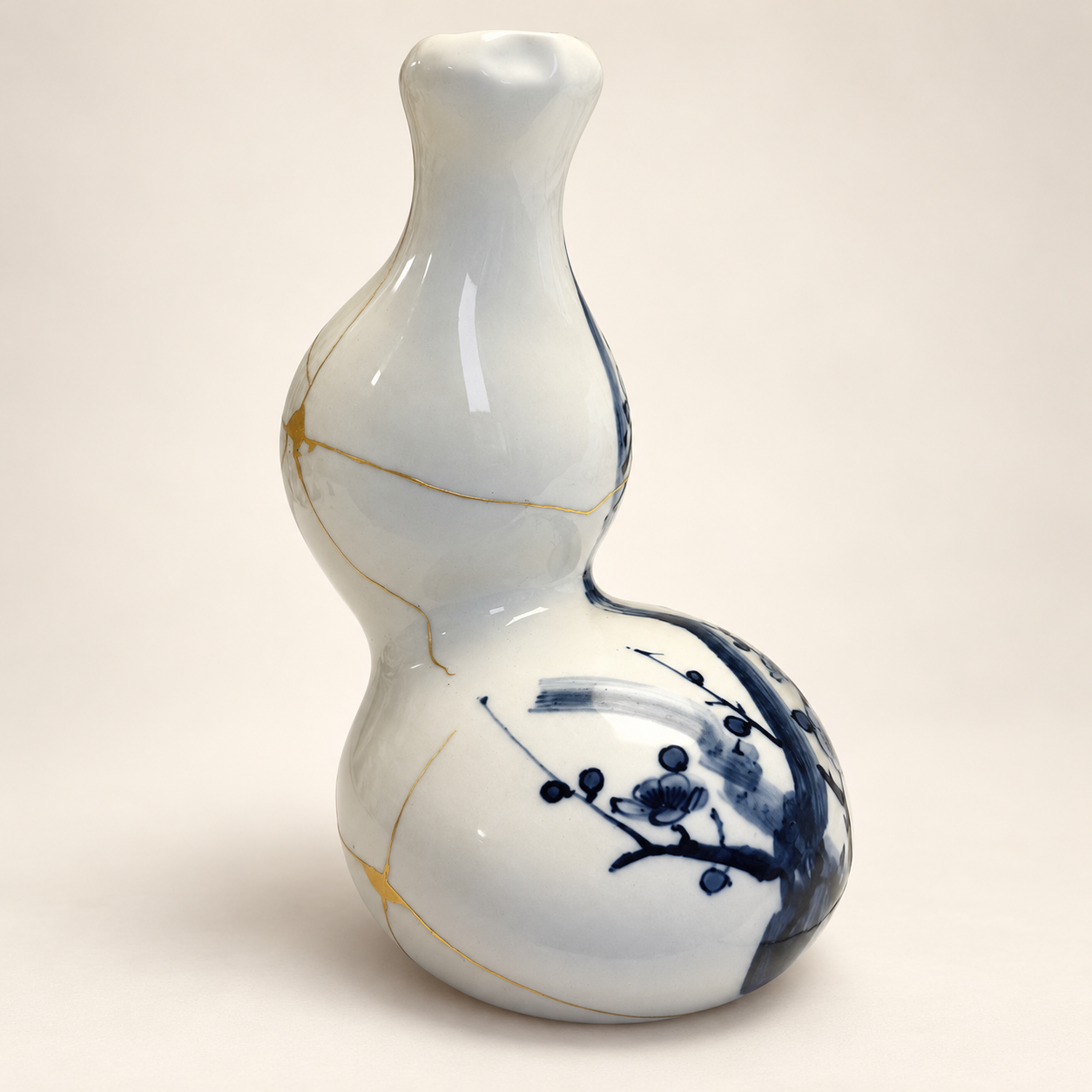
This Japanese porcelain vase combines a softly asymmetrical double-gourd silhouette with a delicate blue floral decoration. Two rounded, offset volumes meet at a narrow waist, continuing into a curved neck with a gently irregular opening. Against the glossy ivory-white surface, flowering branches unfold in blue brushstrokes, alternating between fine outlines and broader, expressive passages.
Known in Japan as hyōtan, the gourd is an auspicious motif associated with protection, prosperity and fertility. Its many seeds evoke abundance and the continuity of life. The floral decoration recalls ume, the flowering plum, whose blossoms emerge while the weather is still cold—a symbol of perseverance and hope.
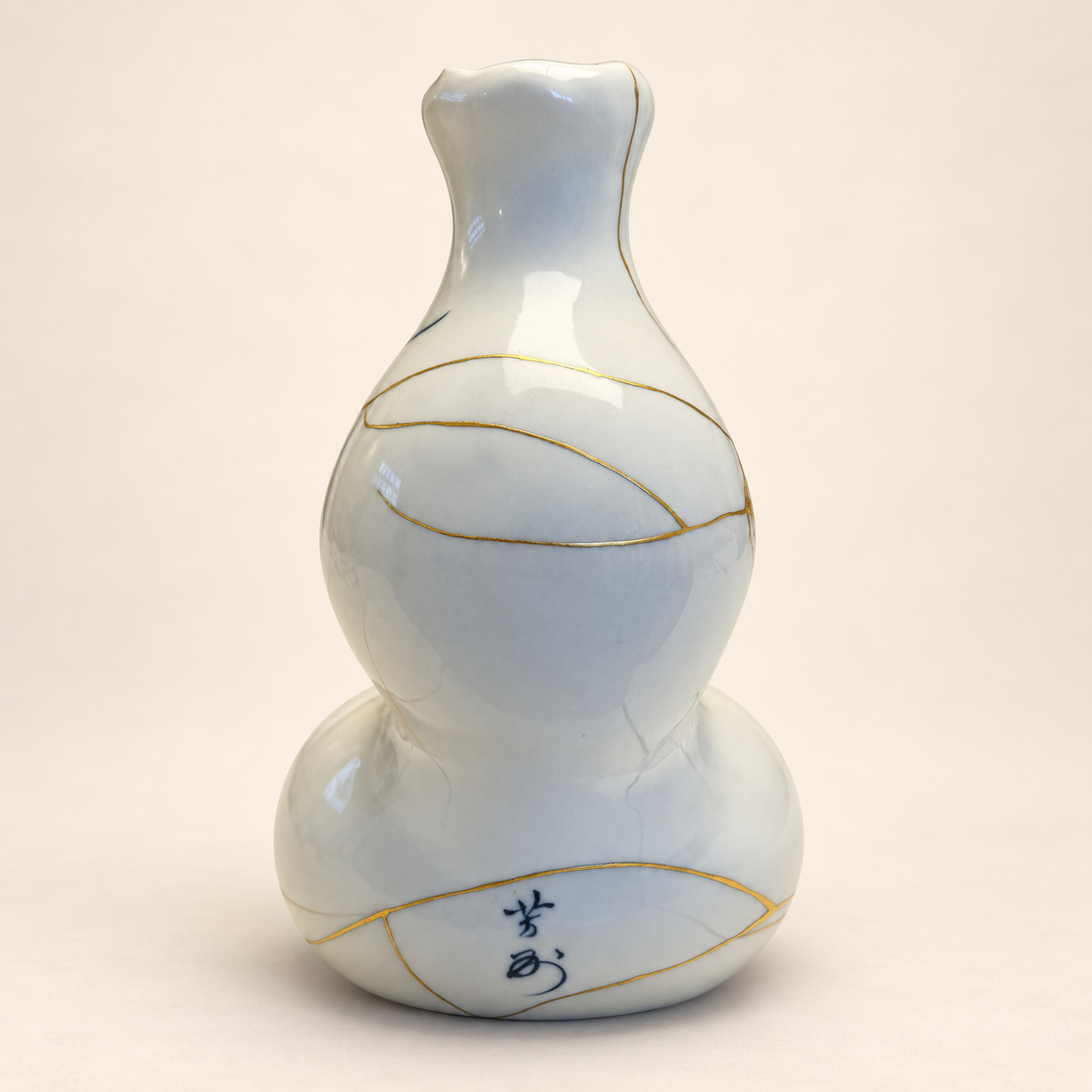
Restored by Myriam Greff using traditional kintsugi, with natural urushi lacquer and pure 24k gold, the vase reveals its fractures through fine golden lines. These travel around the rounded body, cross the painted branches and rise towards the opening. On the less decorated surfaces, the gold becomes a drawing in its own right, punctuated by small, luminous areas where several seams meet.
The blue branches and golden fractures offer two readings of the same surface: one follows the movement of growth, the other records rupture and reunion. Together, they give the vase a quiet sense of renewal, in which its history is neither concealed nor separated from its beauty.
Dimensions: Height 21 cm × width 17 cm — approximately 8.27 × 6.69 inches.
Origin: Japan.
Material: Porcelain with an ivory-white glaze and blue decoration.
Form: Hyōtan, an asymmetrical double-gourd shape.
Decoration: Flowering branches evoking plum blossoms (ume).
Restoration: Traditional kintsugi with natural urushi lacquer and pure 24k gold.
Kintsugi by: Myriam Greff.
One-of-a-kind piece, accompanied by a certificate of authenticity.
Care: Clean gently with a soft, slightly damp cloth. Avoid prolonged soaking, abrasive products and rubbing the gold. Not suitable for the dishwasher.
| Origin | Japan |
|---|---|
| Food Safe | Yes |
| Certificate of Authenticity | Provided |
| Color | White |
| Materials | 24 carats Gold, Ceramic, Urushi (Japanese lacquer) |
Related products