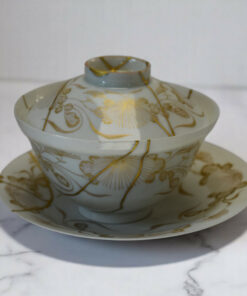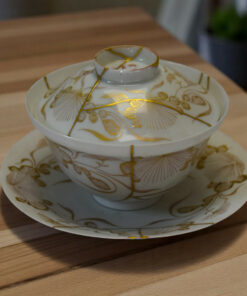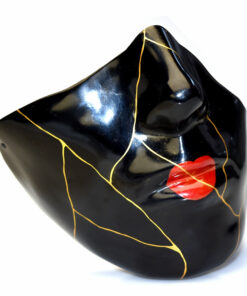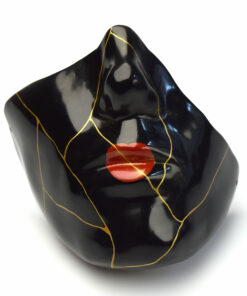
Antique Japanese Satsuma Kintsugi Vase – Seizan, 24K Gold
2 200 € VAT excl.
In stock
Request a private viewingPrivate Viewing
Antique Japanese Satsuma Kintsugi Vase – Seizan, 24K Gold
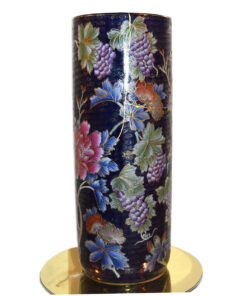
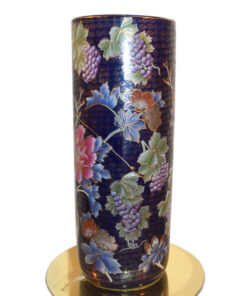
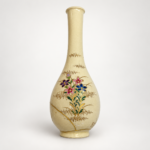
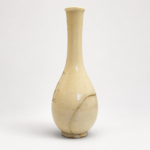
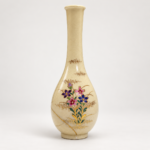
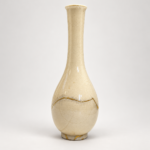
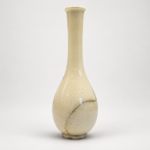
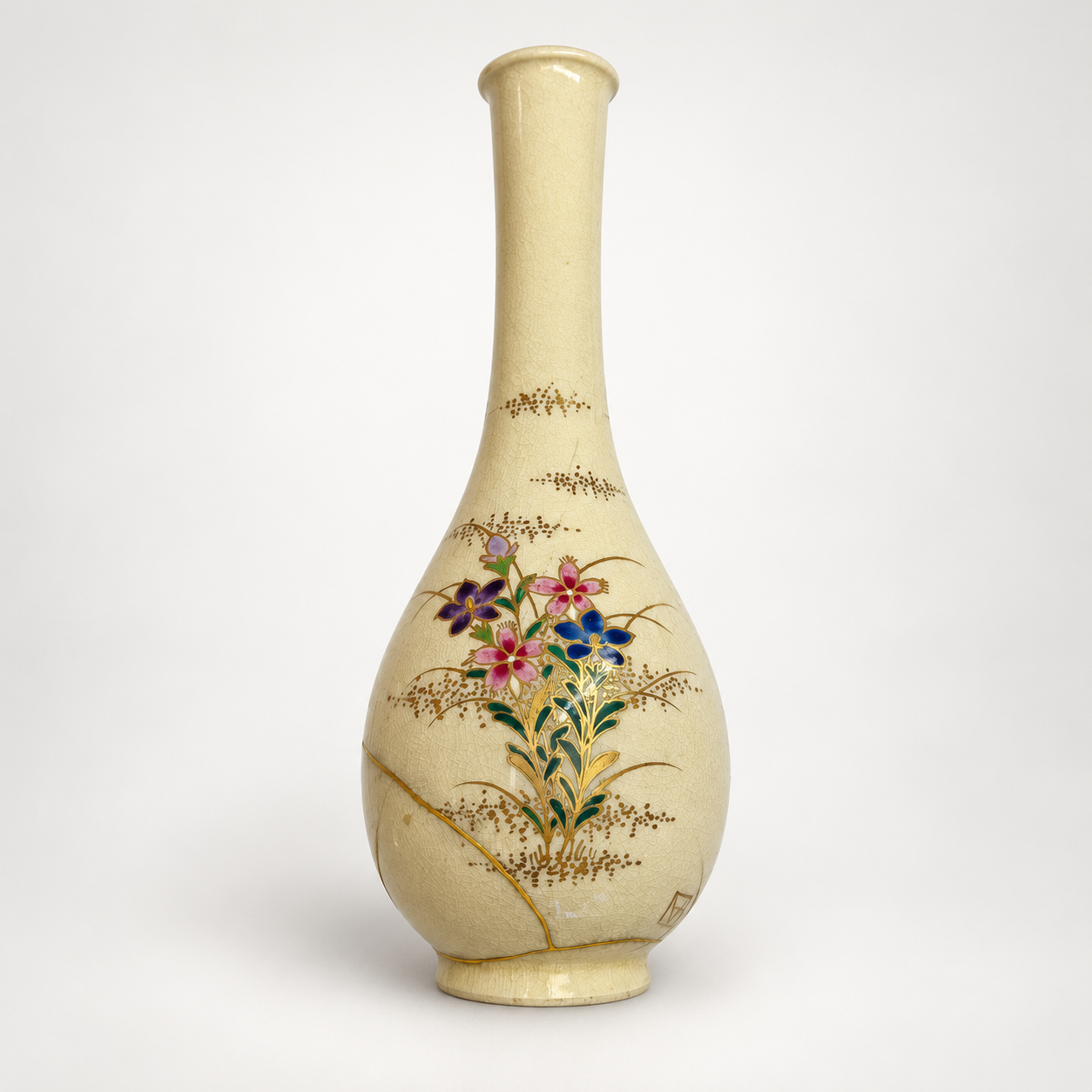
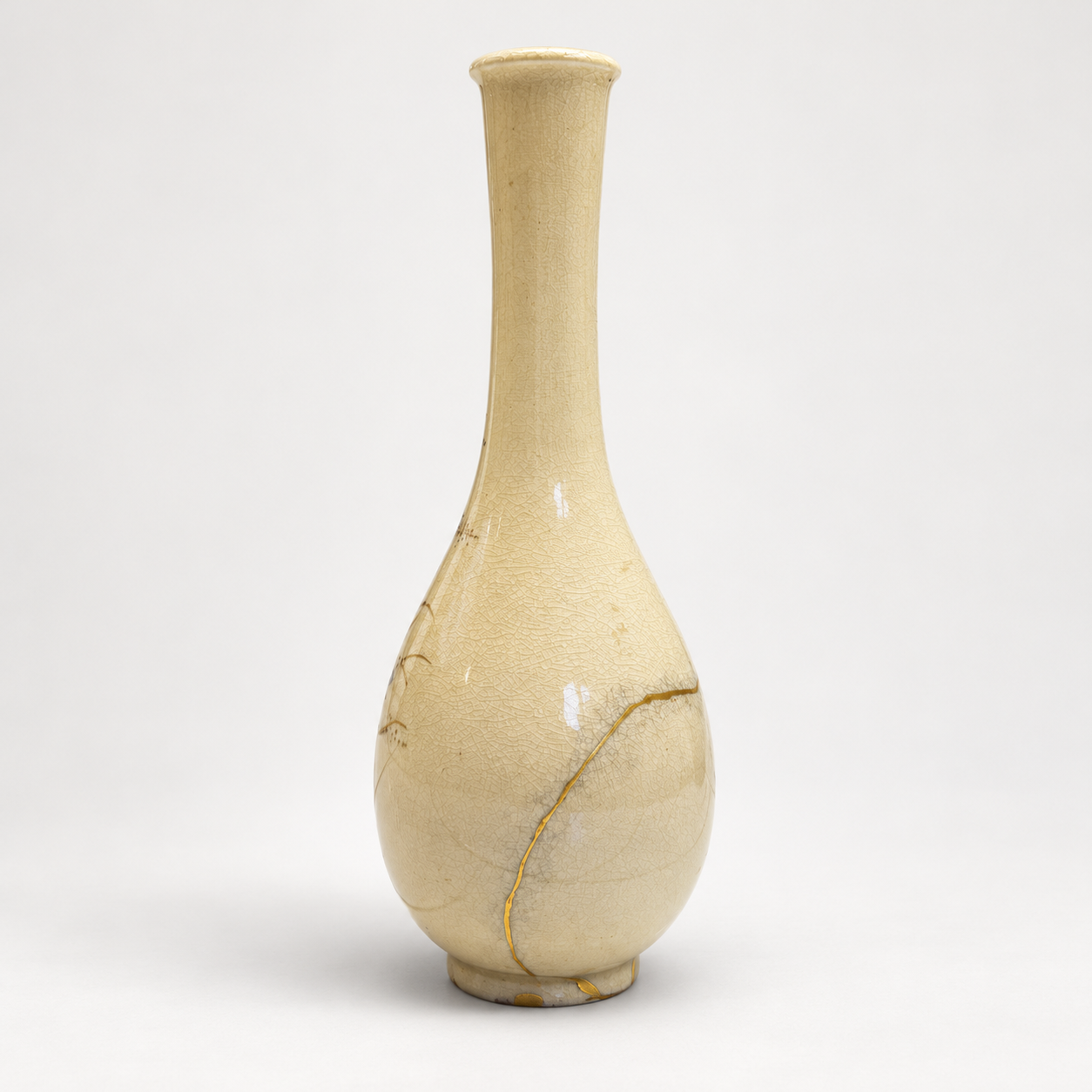
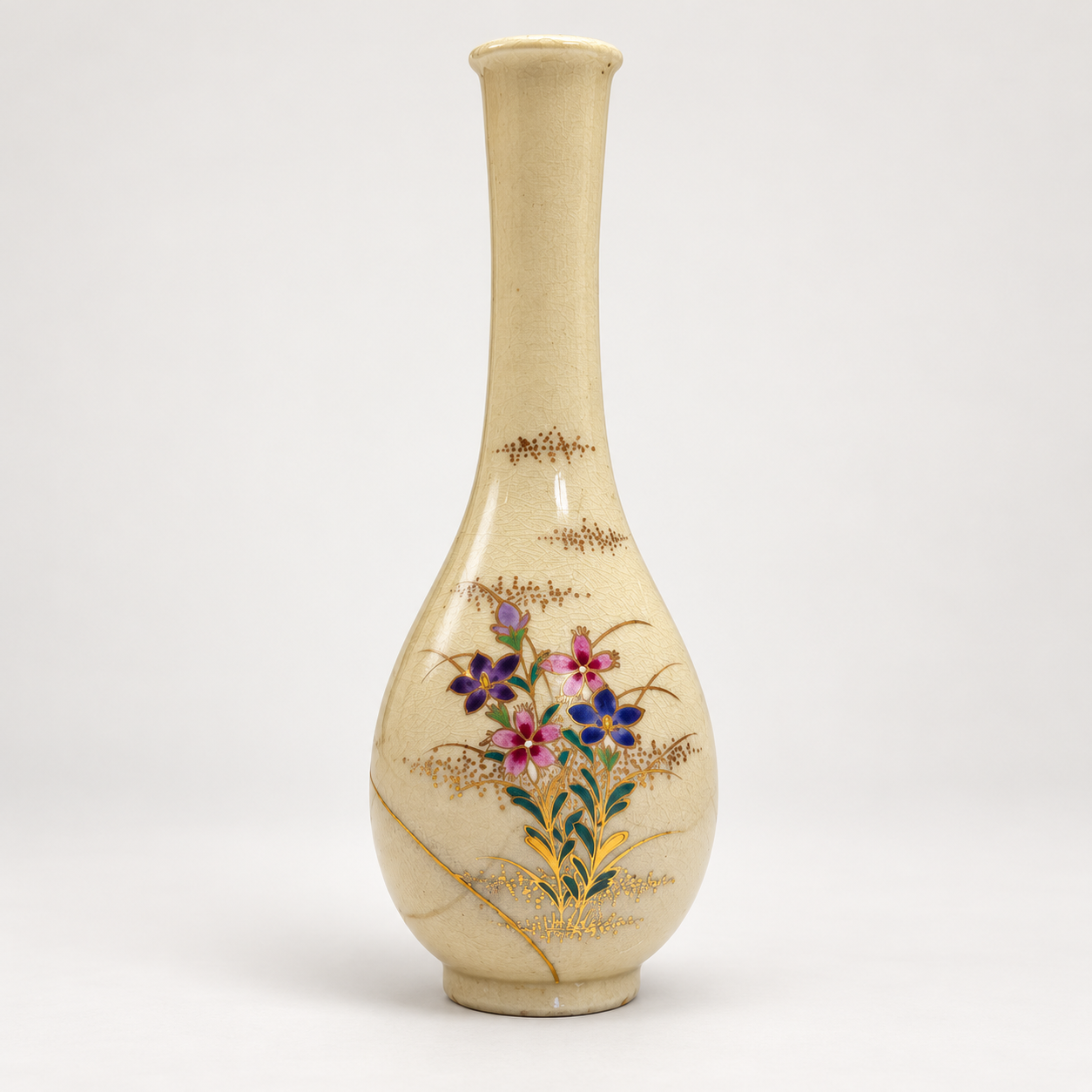
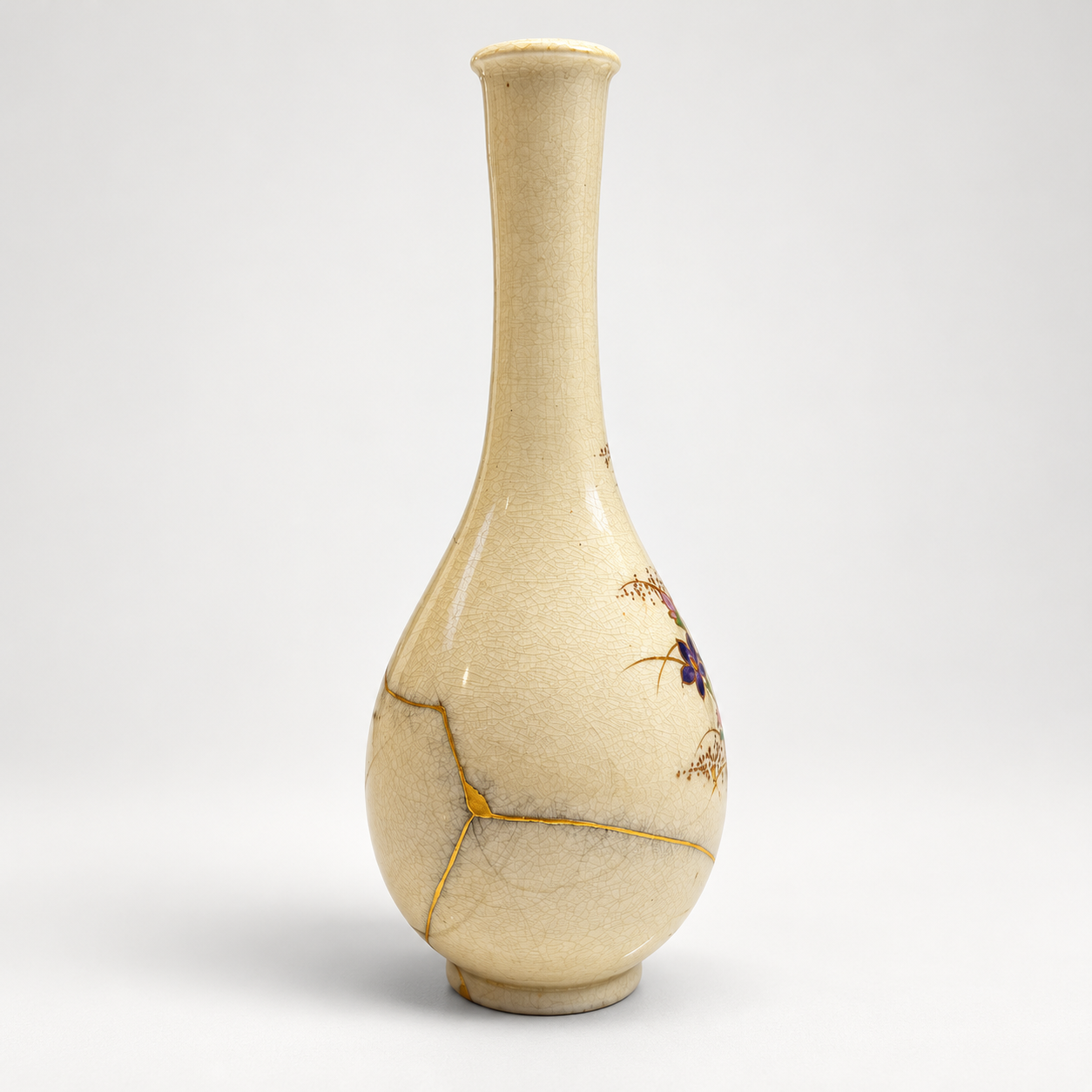
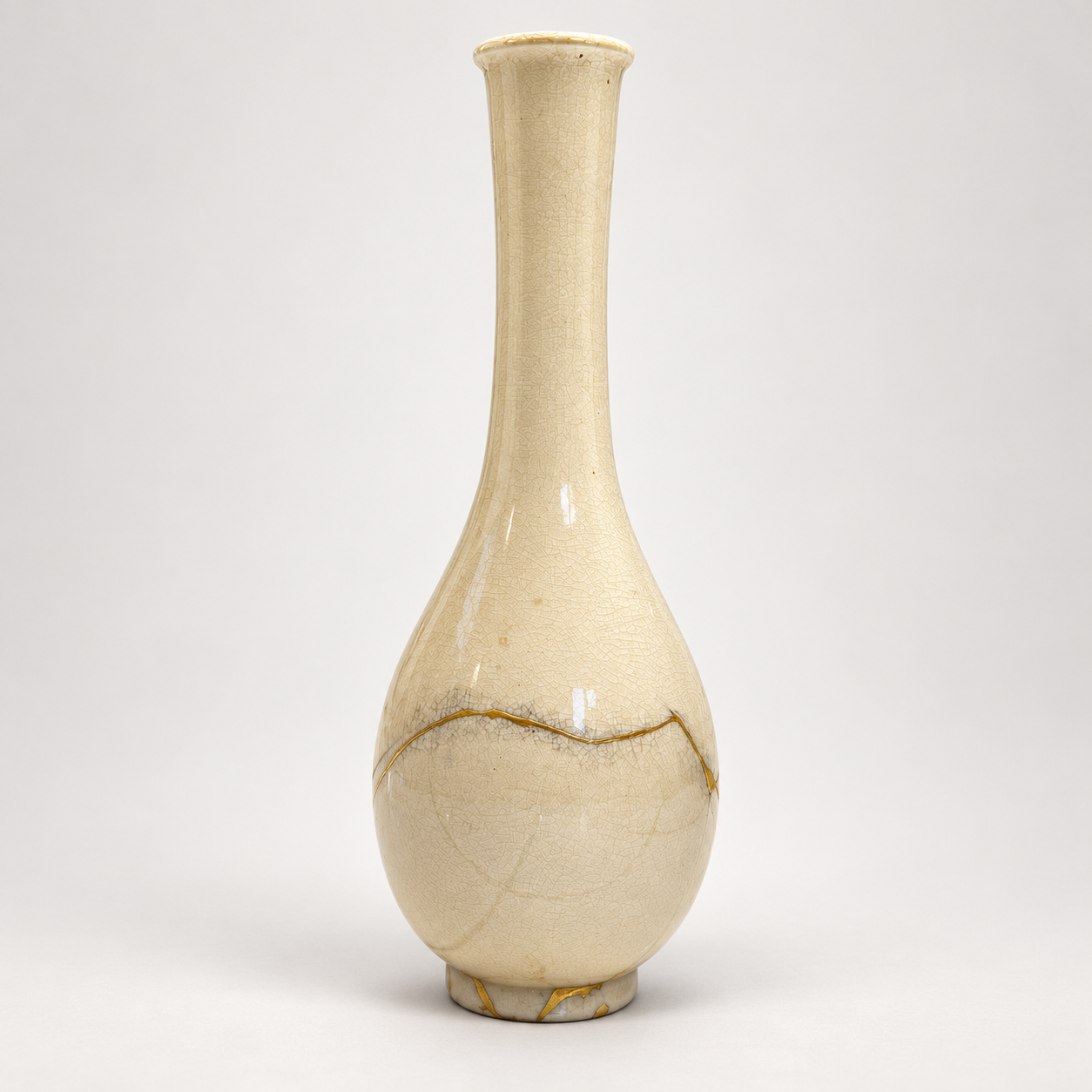
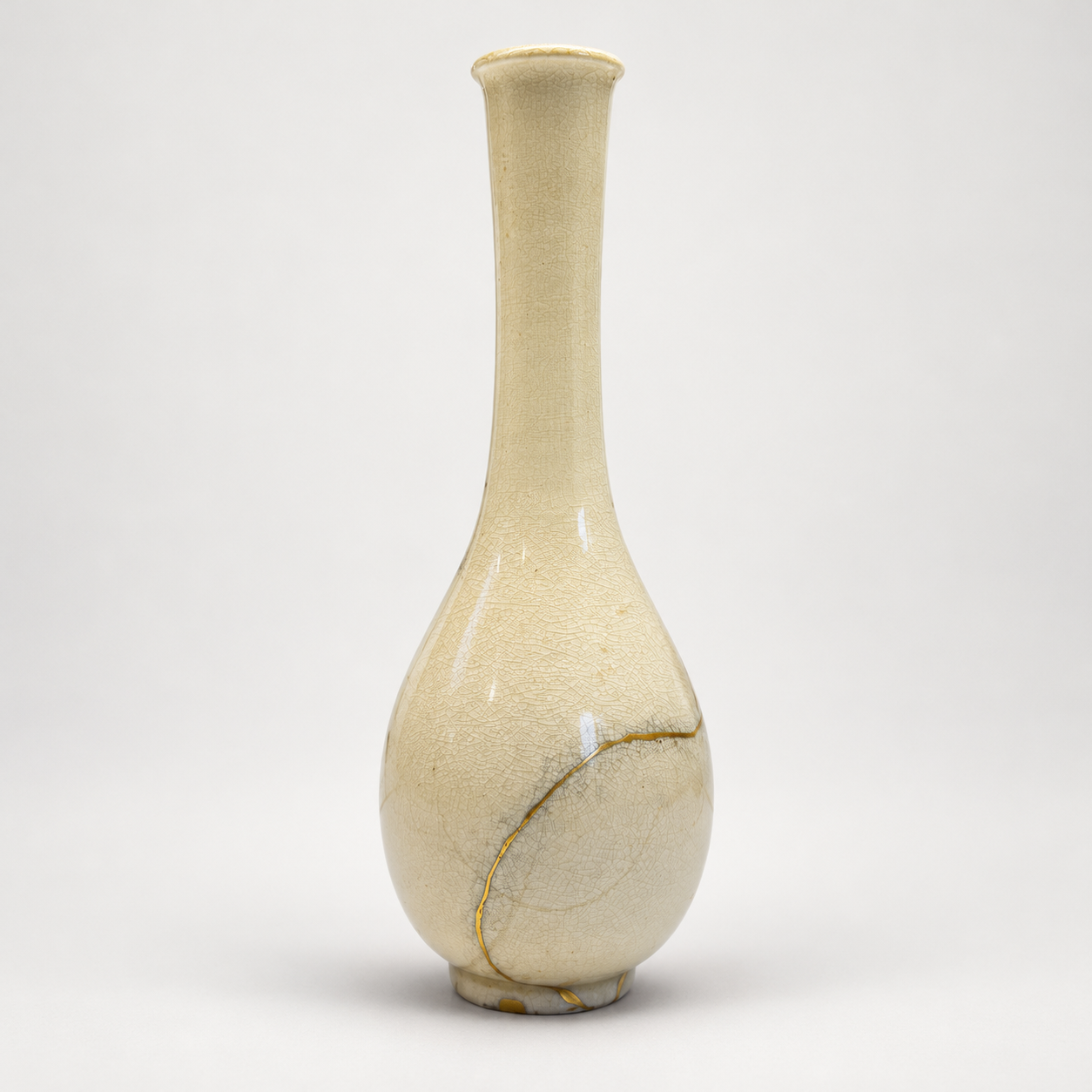
This elegant Japanese Satsuma vase, probably dating from the early 20th century, is distinguished by its slender bottle-shaped silhouette, warm ivory glaze and delicate network of fine craquelure.
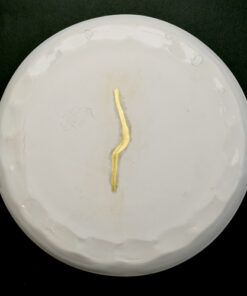
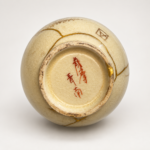
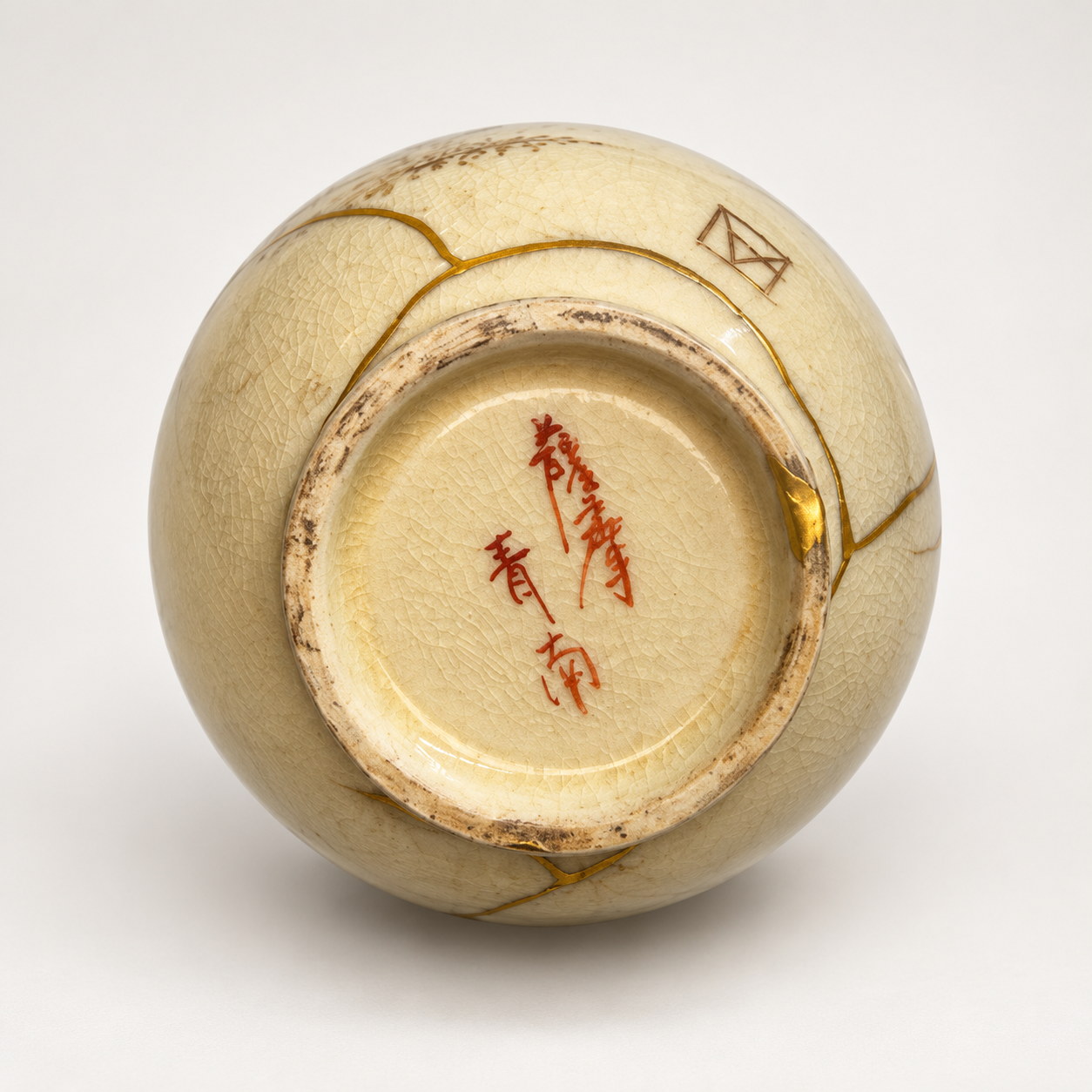
The base bears a red mark that appears to read Satsuma-yaki / Seizan (薩摩焼 / 青山). Pieces associated with the Seizan name are known from the late Meiji and Taishō periods, and this vase can most plausibly be dated to circa 1910–1930.
Its hand-painted decoration depicts delicate blue, violet and pink flowers among fine grasses and gilded stems. The composition appears to evoke the traditional Japanese autumn grasses – akikusa – including kikyō bellflowers and nadeshiko pinks, plants celebrated for centuries in Japanese poetry and art. Their imagery is closely associated with the fleeting beauty and refined atmosphere of autumn.
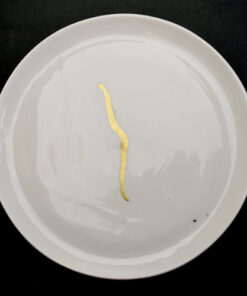
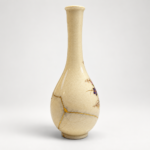
Once broken, the vase was restored in my studio using the traditional Japanese art of kintsugi, with natural urushi lacquer and 24K gold. The new golden lines cross the original floral decoration without concealing it, adding another layer to the history of an already antique object.
The encounter between an early 20th-century Japanese ceramic and a contemporary traditional restoration makes this a truly unique piece.
Details
Japanese Satsuma ceramic vase
Signed Seizan (青山), attributed
Probably circa 1910–1930
Polychrome floral decoration on ivory crackle glaze
Traditional kintsugi with natural urushi lacquer and 24K gold
Height: 22 cm
Unique antique piece
Care: Handle gently and clean with a soft cloth. If used with water, empty after use and dry thoroughly. Avoid abrasive products, prolonged soaking and thermal shocks.
| Origin | Japan |
|---|---|
| Food Safe | Yes |
| Certificate of Authenticity | Provided |
| Color | Cream |
| Materials | 24 carats Gold, Ceramic, Urushi (Japanese lacquer) |