Antique Japanese Hira-bachi Bowl Restored with Kintsugi – 24-Carat Gold
1 050 € VAT excl.
In stock
Request a private viewingPrivate Viewing
Antique Japanese Hira-bachi Bowl Restored with Kintsugi – 24-Carat Gold
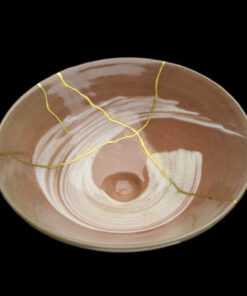
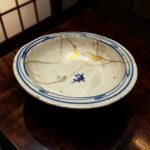
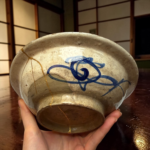
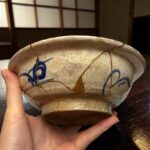
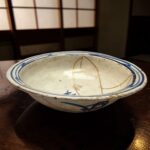
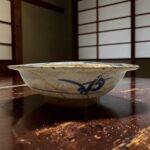
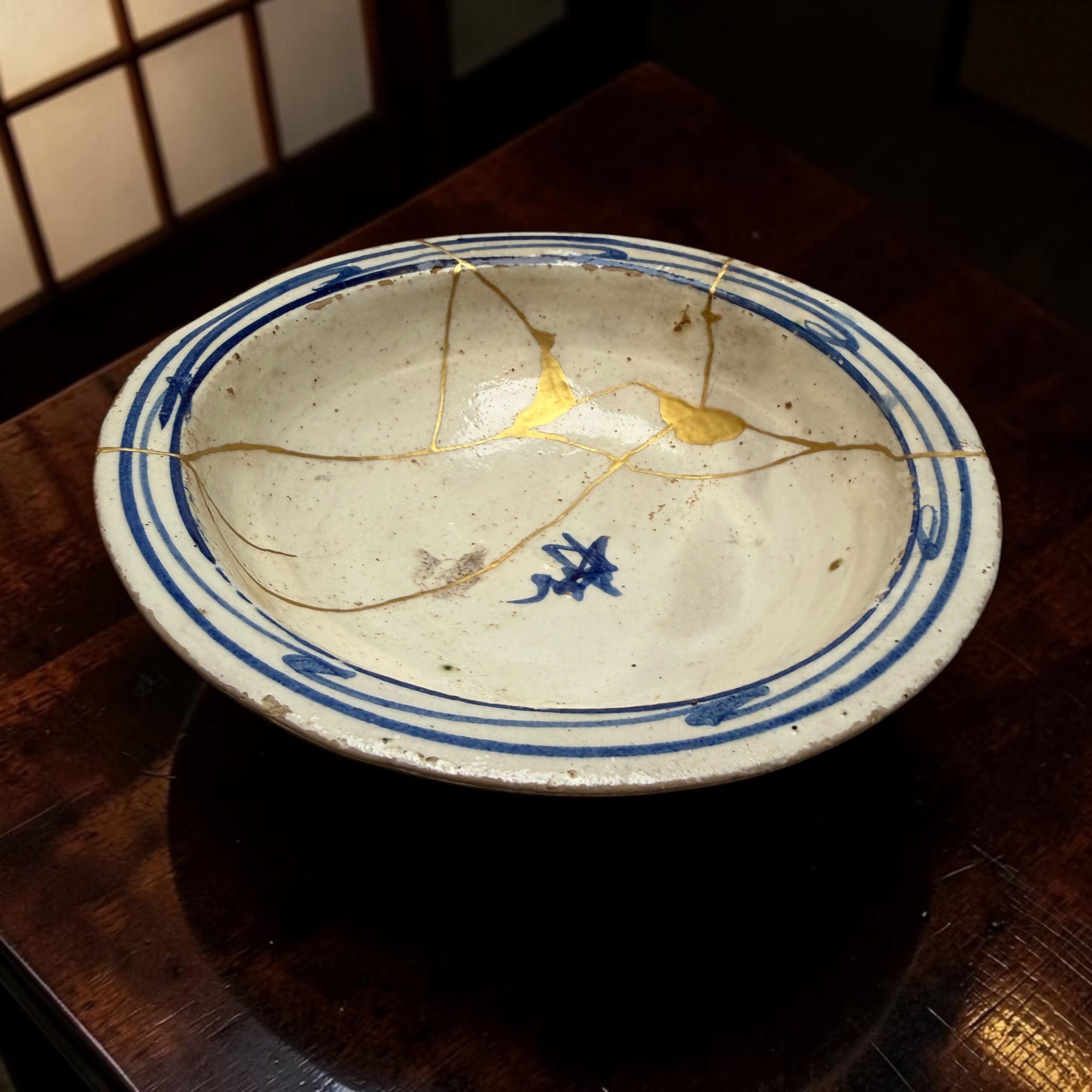
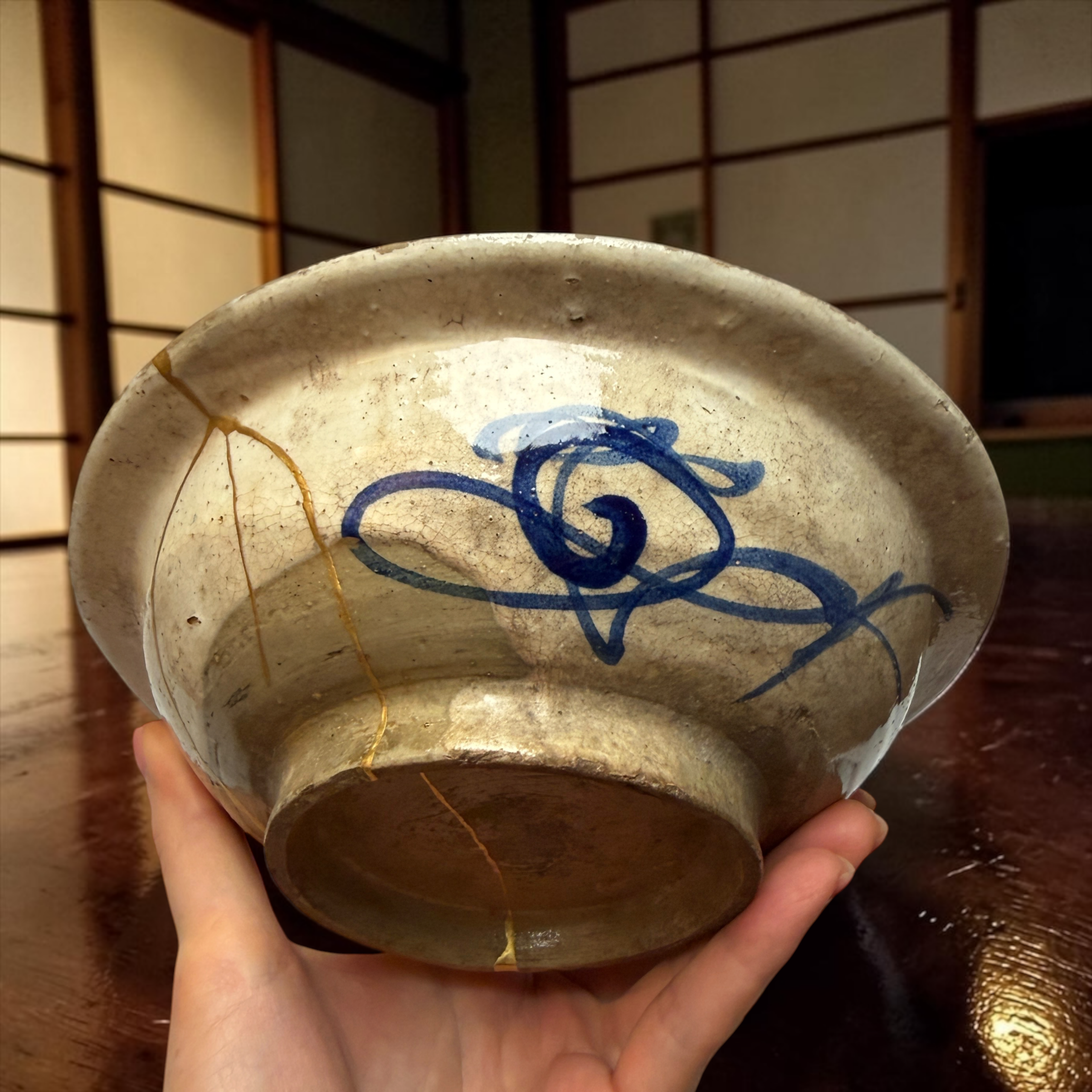
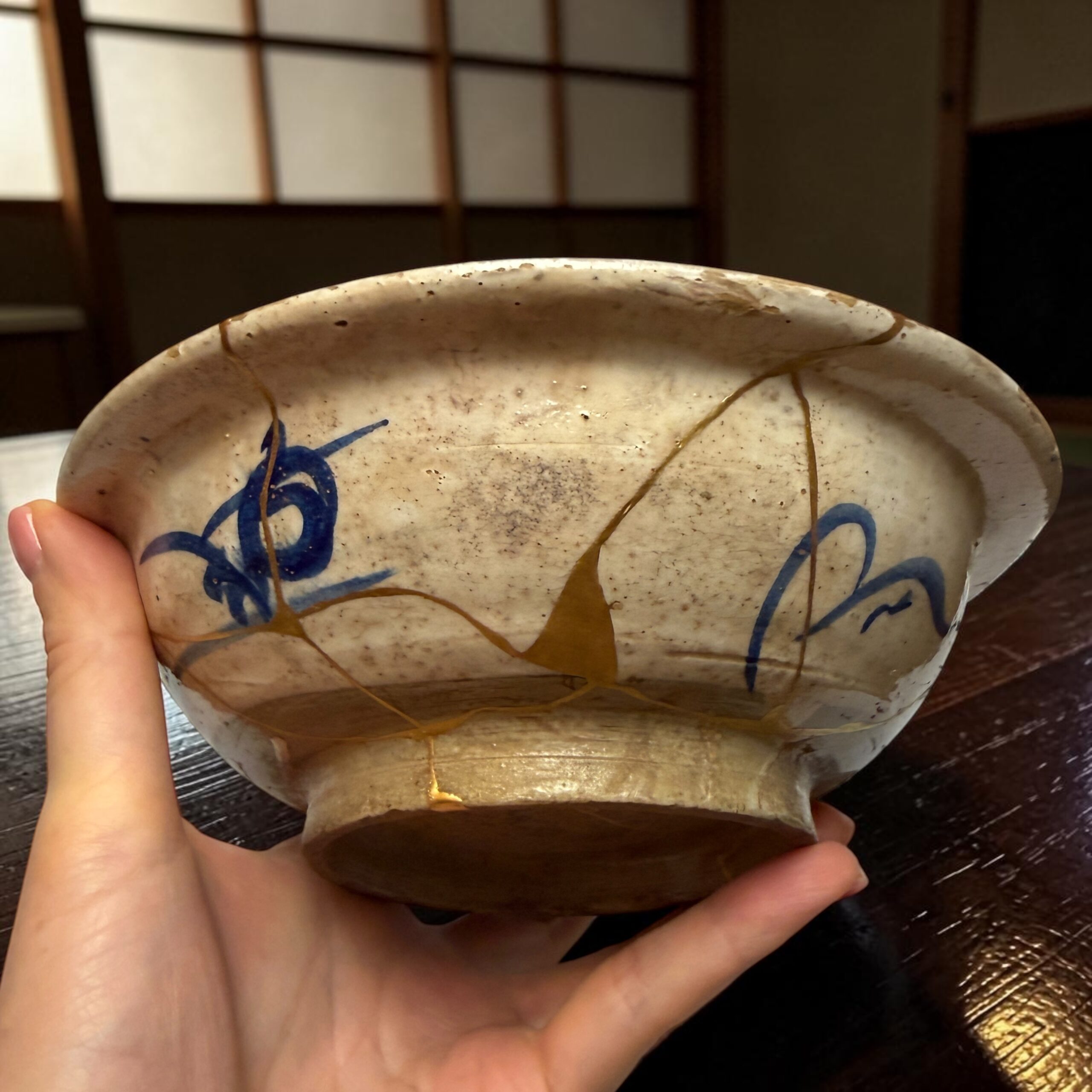
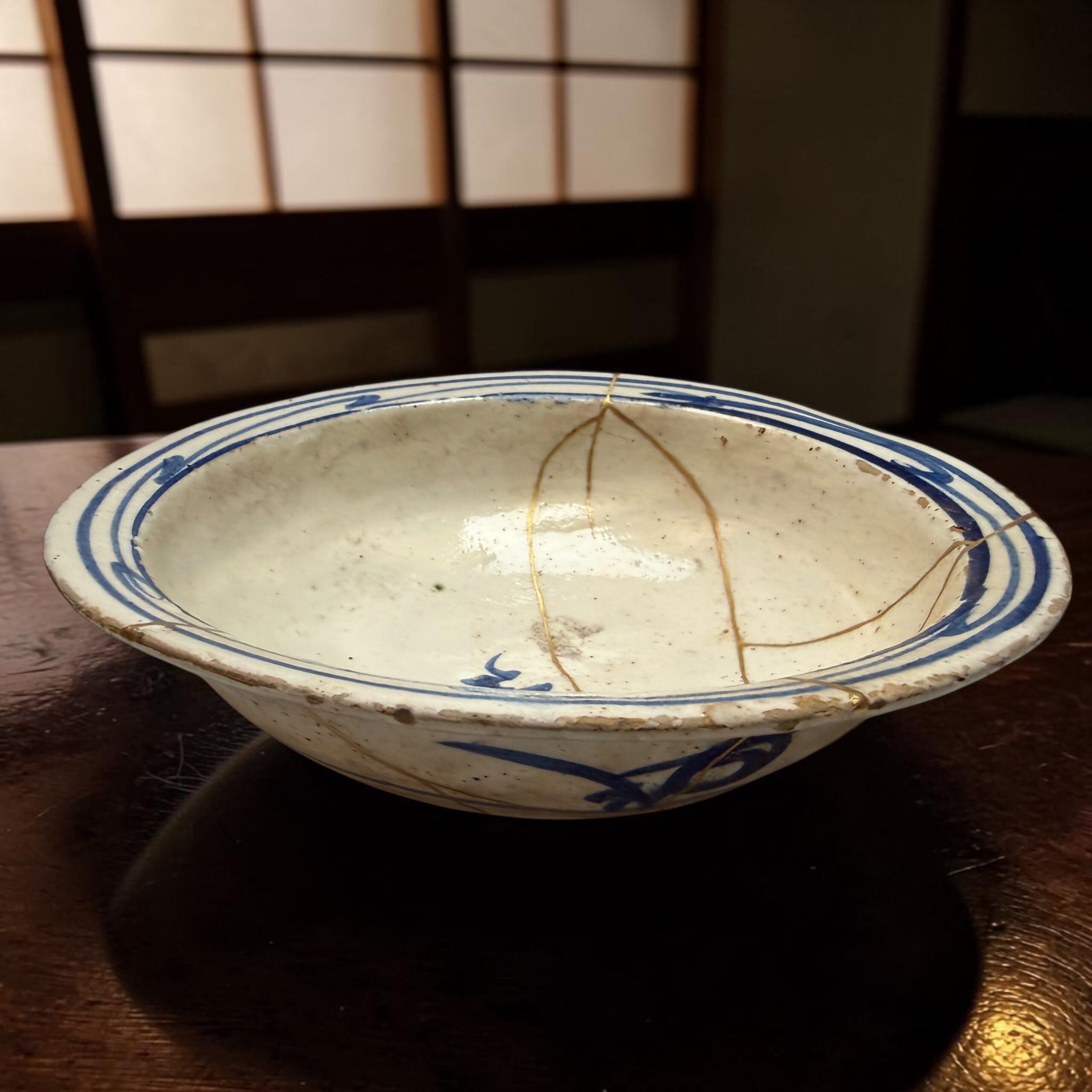
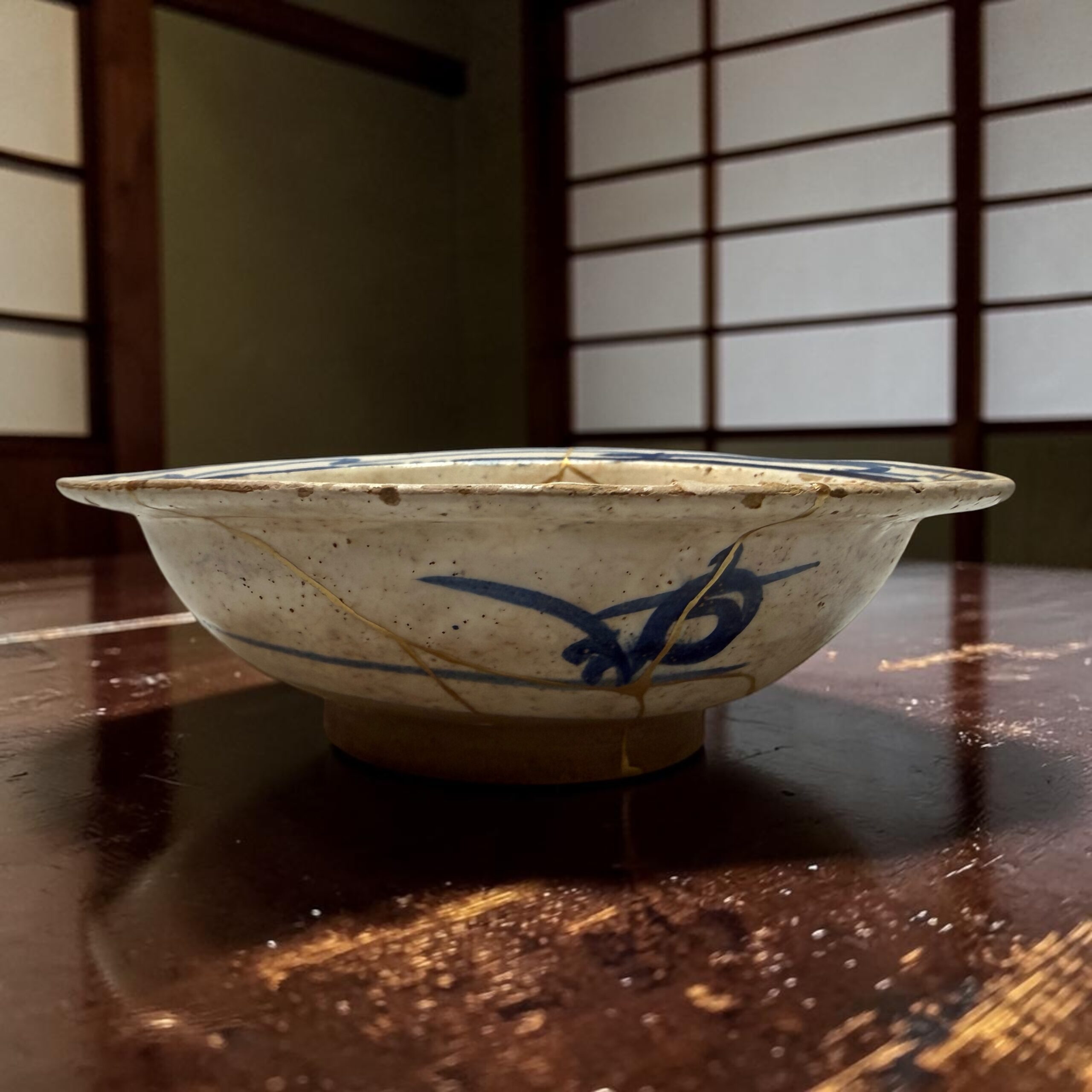
A large antique Japanese bowl in the hira-bachi form, characterised by a low, generously open shape, a flared rim and a ring foot. Despite its substantial size, the piece is remarkably light, with delicately thin walls.
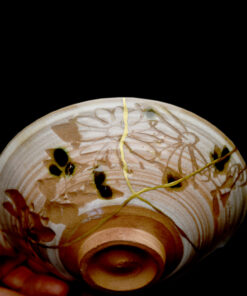
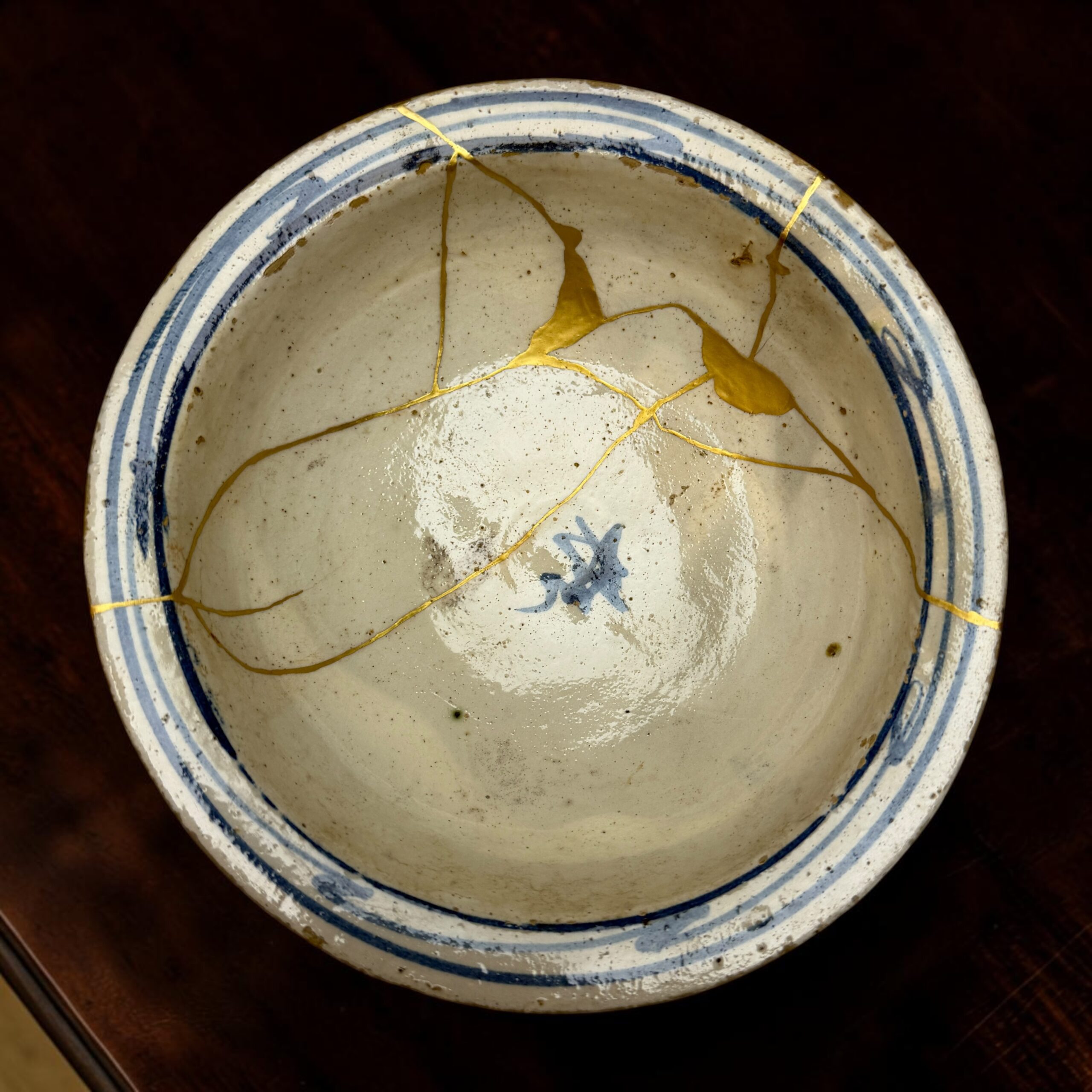
Its warm creamy-white glaze is enriched by numerous firing variations and traces of age. The bowl is decorated in cobalt blue beneath the glaze, with several concentric lines framing the rim and freely painted, almost calligraphic motifs extending across both the interior and exterior. A small blue-painted symbol appears at the centre.
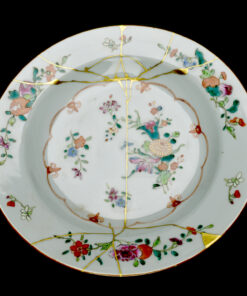
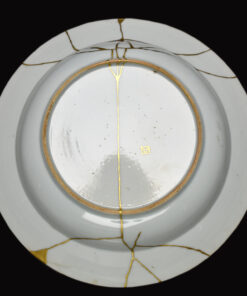
Its numerous fractures have been restored using the traditional Japanese art of kintsugi, with natural urushi lacquer and pure 24-carat gold powder. The golden lines extend across the full width of the bowl and interact with the spontaneity of the blue decoration, transforming the breaks into a new composition.
An expressive antique piece, remarkable for its lightness and the visible traces of its long history.
Probable origin: Japan
Estimated period: late 18th–19th century, subject to specialist appraisal
Form: large hira-bachi serving bowl
Material: thin-walled glazed ceramic
Decoration: cobalt-blue underglaze concentric lines and calligraphic motifs
Restoration: traditional kintsugi using natural Japanese urushi lacquer and pure 24-carat gold
Dimensions: approximately 7.1 in diameter × 2.2 in high
Unique piece
Traditional kintsugi is suitable for food use once the lacquer has fully cured.
Care instructions: wash gently by hand only. Do not place in a dishwasher, oven or microwave. Avoid abrasive products, thermal shock and prolonged soaking.
| Origin | Japan |
|---|---|
| Food Safe | Yes |
| Certificate of Authenticity | Provided |
| Color | Blue, White |
| Materials | 24 carats Gold, Ceramic, Urushi (Japanese lacquer) |