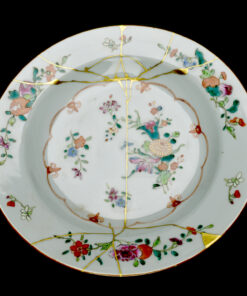
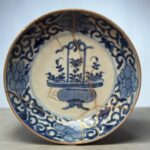
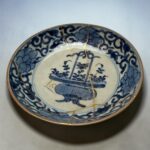
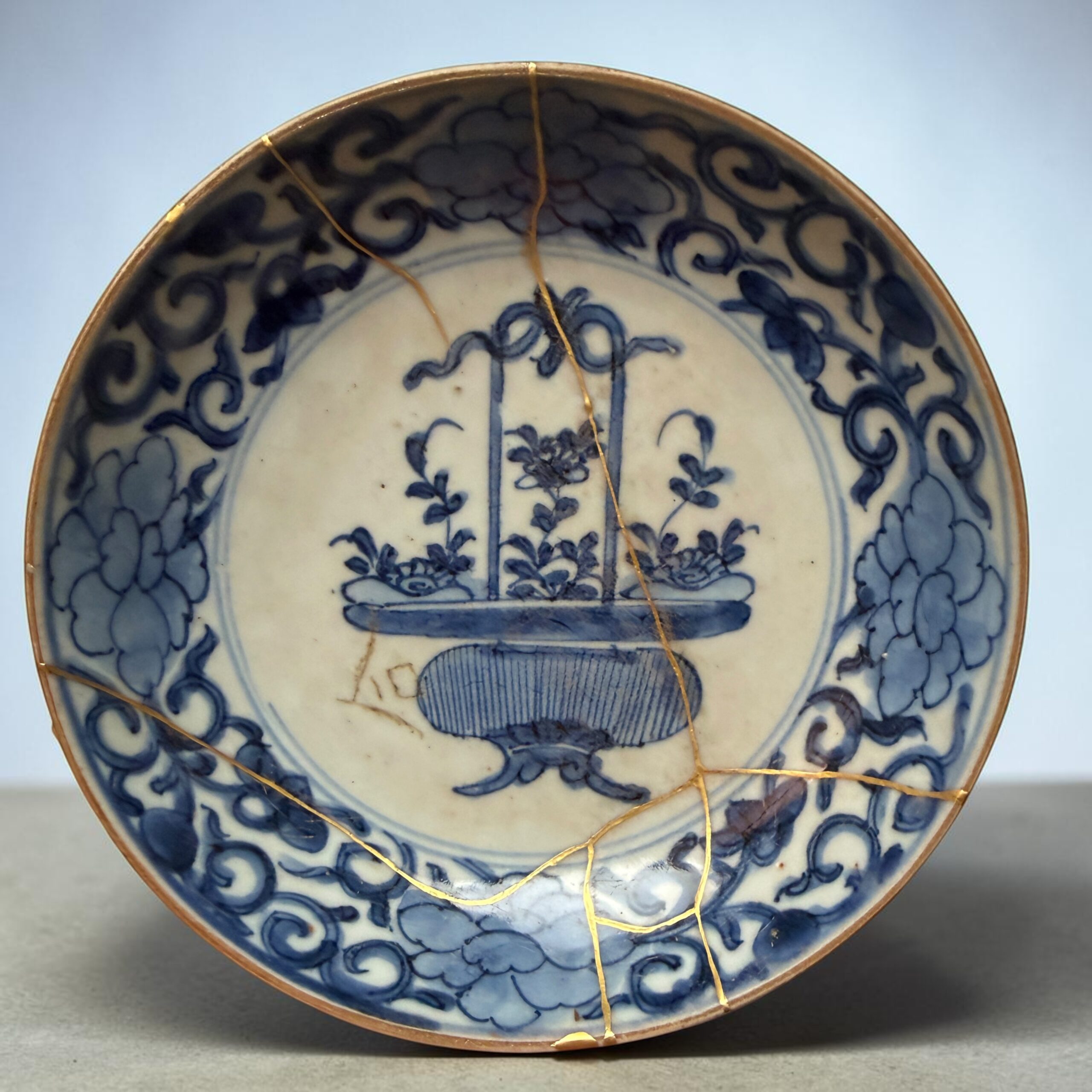
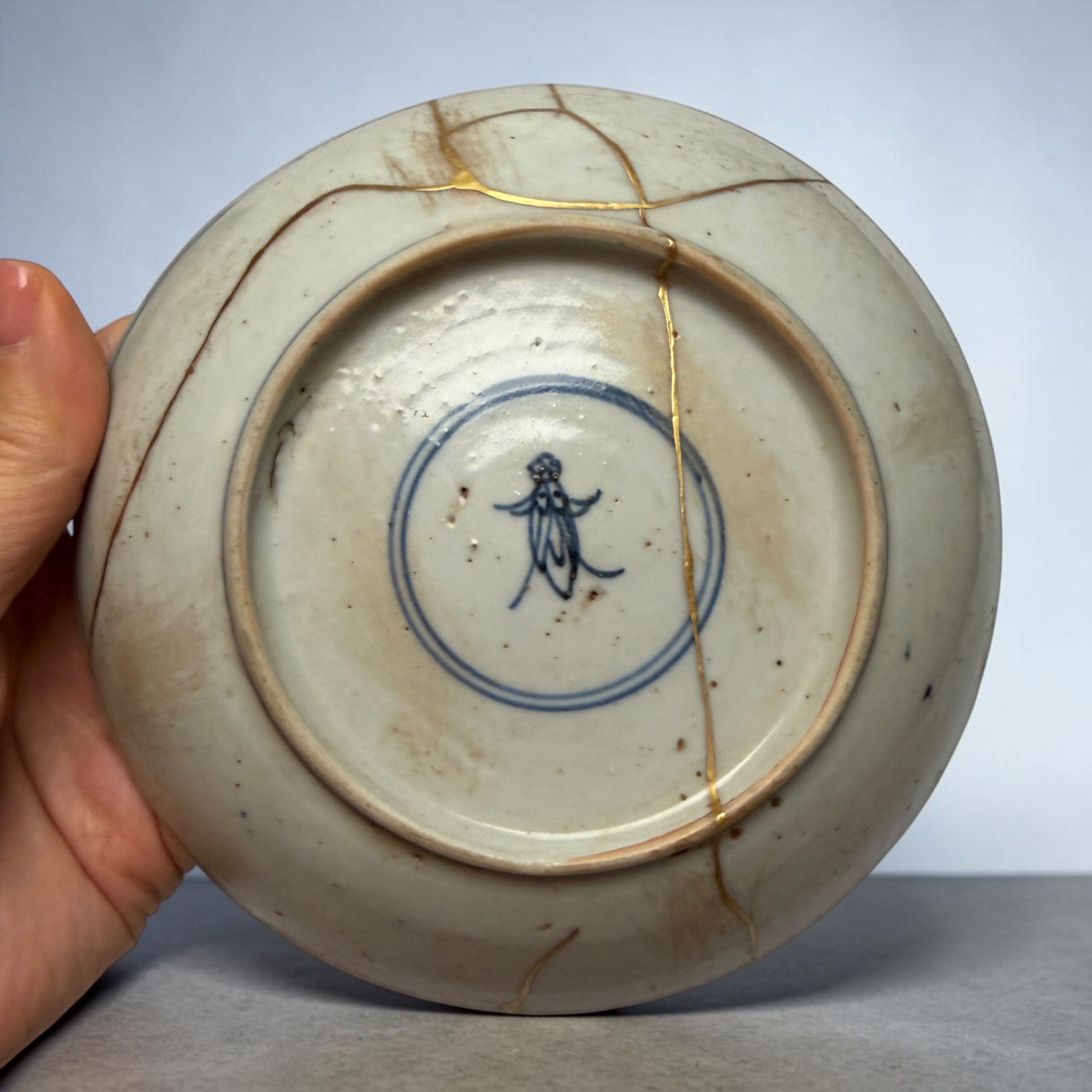
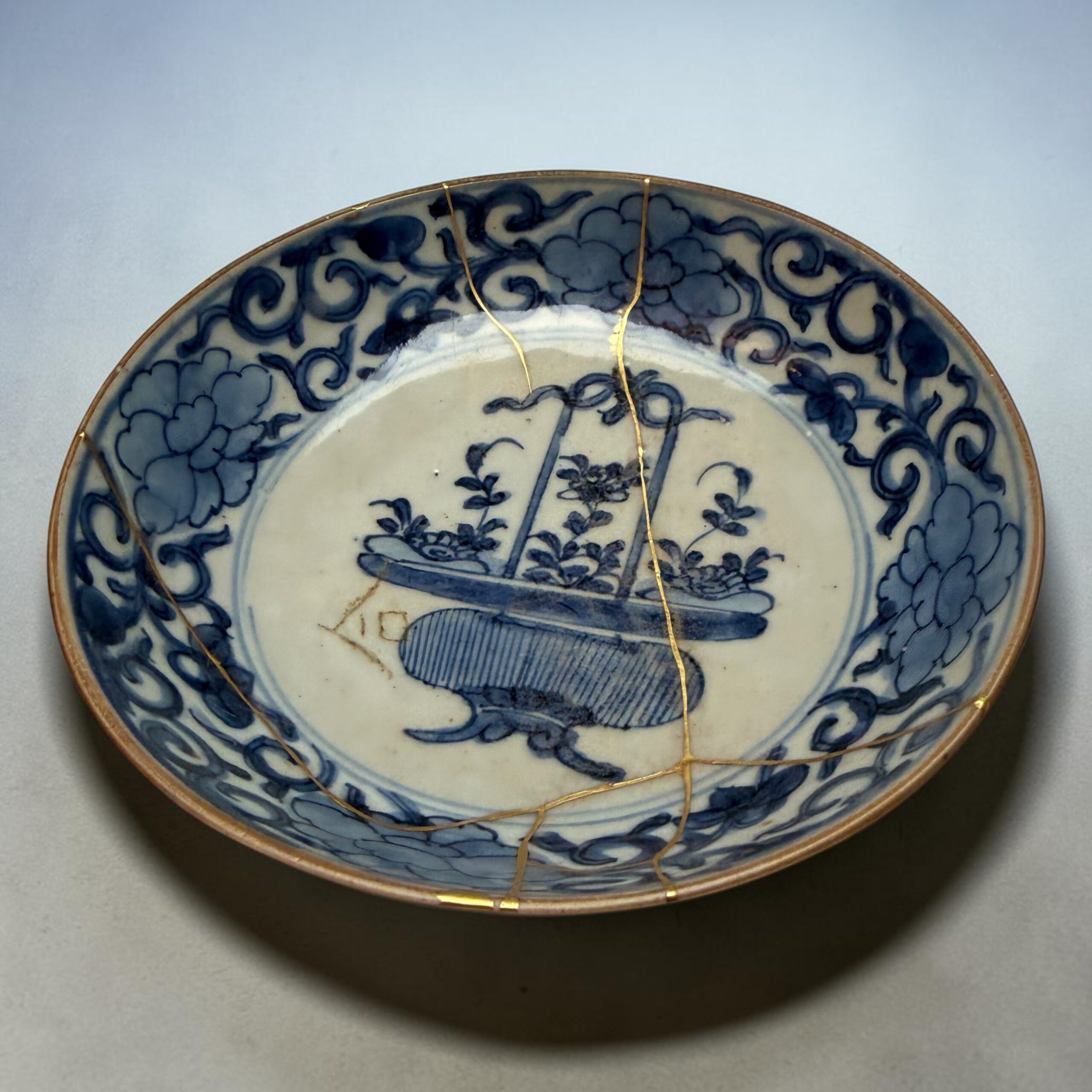
A small antique glazed ceramic dish, probably of Chinese origin, decorated in cobalt blue beneath the glaze.
The centre features an elegant floral arrangement displayed in a raised jardinière beneath a tied-ribbon motif. The border is richly decorated with flowers, probably peonies, intertwined with stylised foliage and scrolling vines.
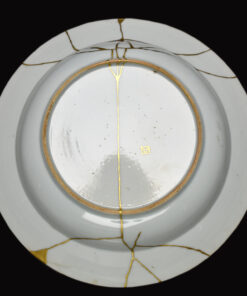
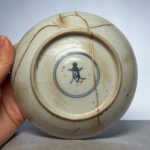
A small inscription or mark incised into the ceramic body is also visible to the left of the central decoration. It resembles a sinographic character, although its meaning remains unidentified. On the reverse, a second figurative mark painted in blue, reminiscent of an insect, appears within a double circle.
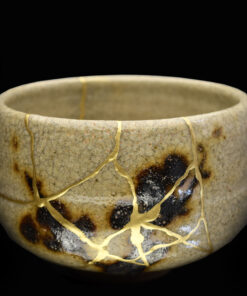
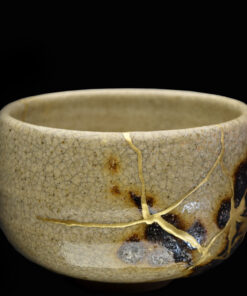
Its numerous fractures have been restored using the traditional Japanese art of kintsugi, with natural urushi lacquer and pure 24-carat gold powder. The golden lines travel across the blue-and-white decoration, creating a new composition that reveals the history of the object rather than concealing it.
A distinctive antique piece in which the delicacy of the botanical decoration meets the luminous irregularity of gold.
Probable origin: China, subject to specialist appraisal
Estimated period: 18th–19th century, subject to specialist appraisal
Type: small shallow dish
Material: glazed ceramic
Decoration: floral jardinière, peonies and scrolling foliage painted in cobalt-blue underglaze
Distinctive features: inscription or mark incised into the ceramic body, resembling a sinographic character; insect-shaped mark on the reverse
Restoration: traditional kintsugi using natural Japanese urushi lacquer and pure 24-carat gold
Diameter: approximately 5.7 in
Unique piece
Traditional kintsugi is suitable for food use once the lacquer has fully cured.
Care instructions: wash gently by hand only. Do not place in a dishwasher, oven or microwave. Avoid abrasive products, thermal shock and prolonged soaking.