Antique Chinese Kintsugi Vase – 24K Gold & Blue Glaze
2 200 € VAT excl.
In stock
Request a private viewingPrivate Viewing
Antique Chinese Kintsugi Vase – 24K Gold & Blue Glaze
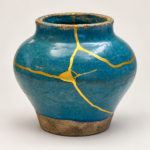
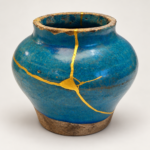
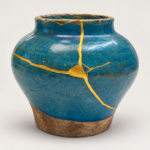
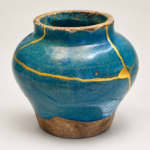
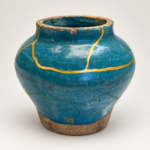
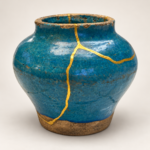
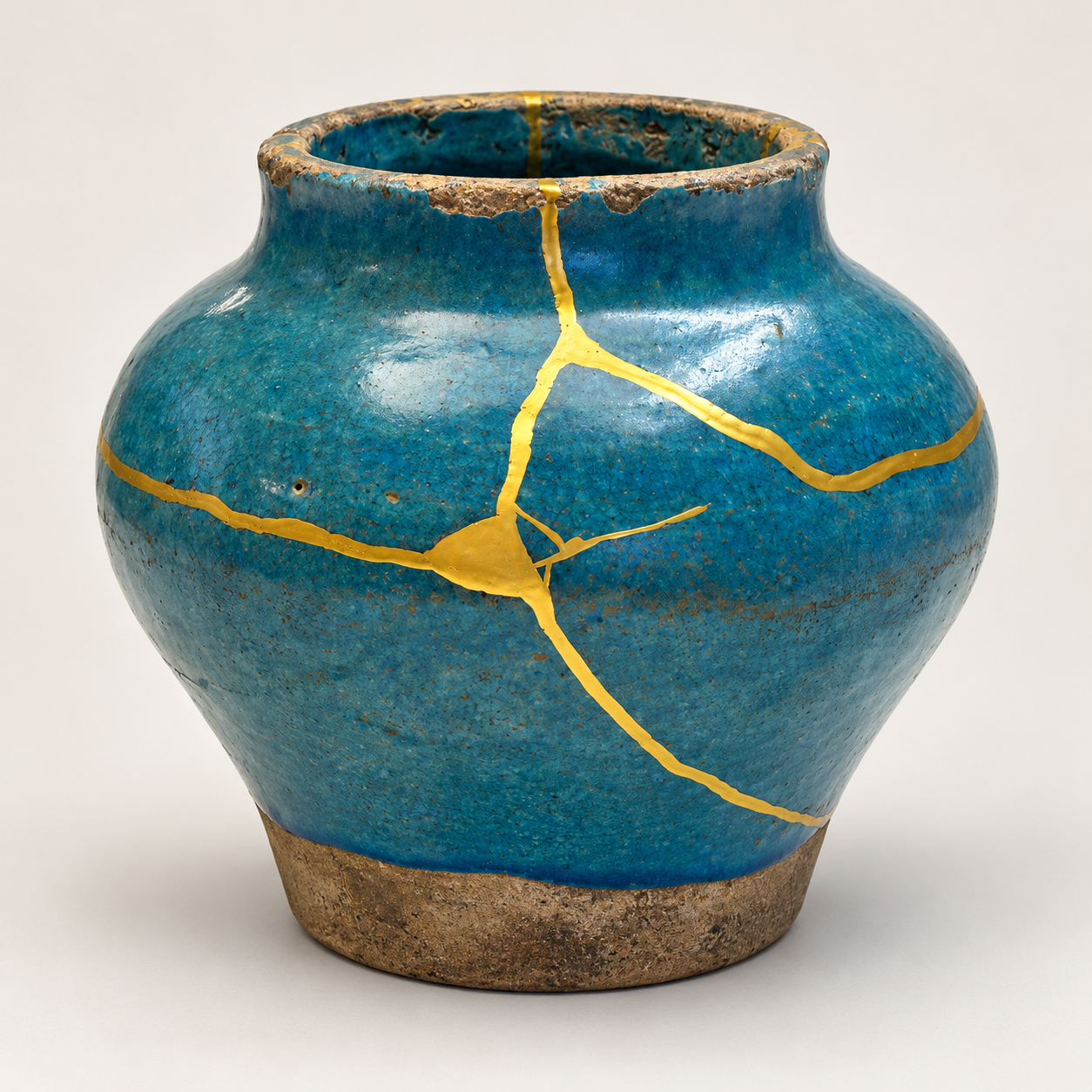
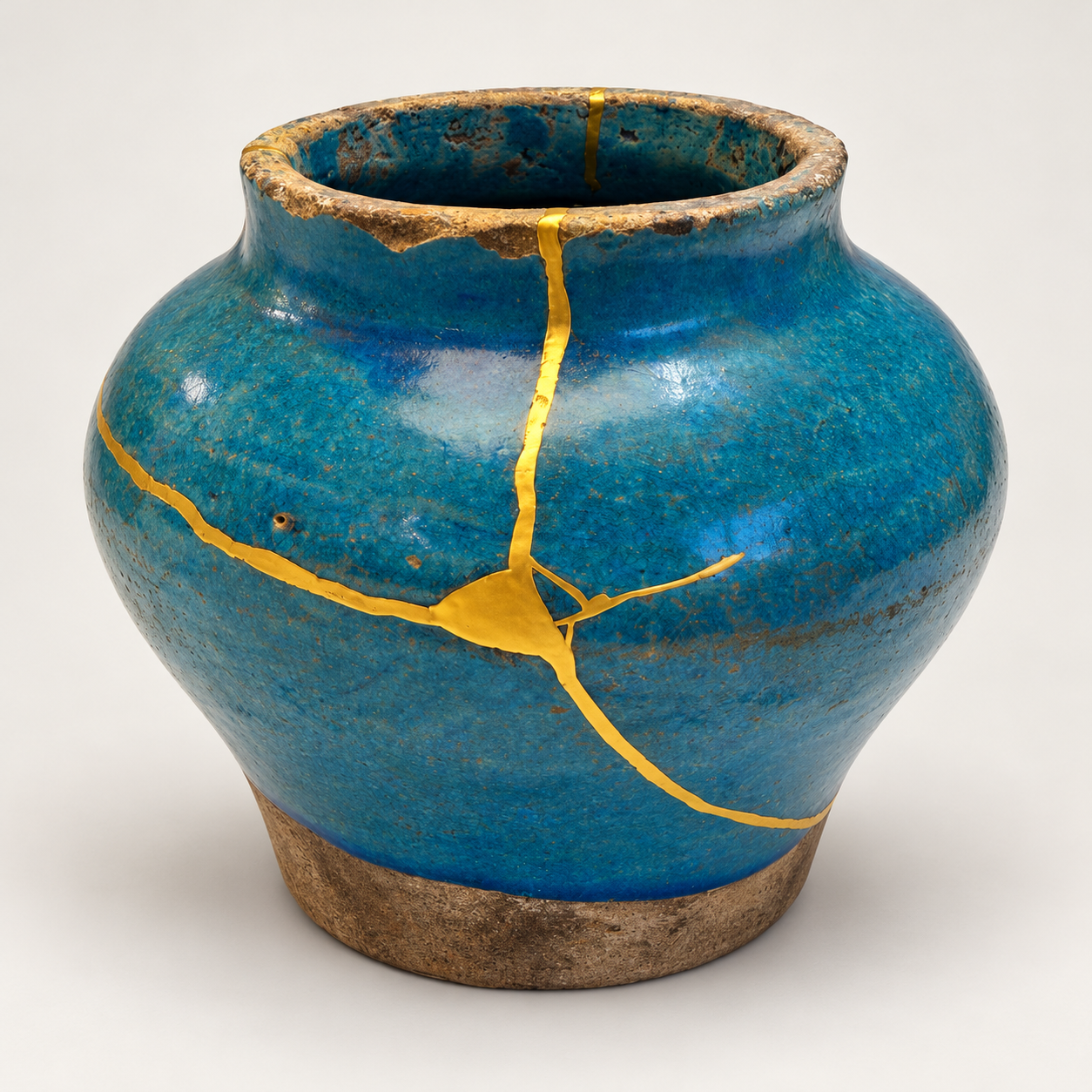
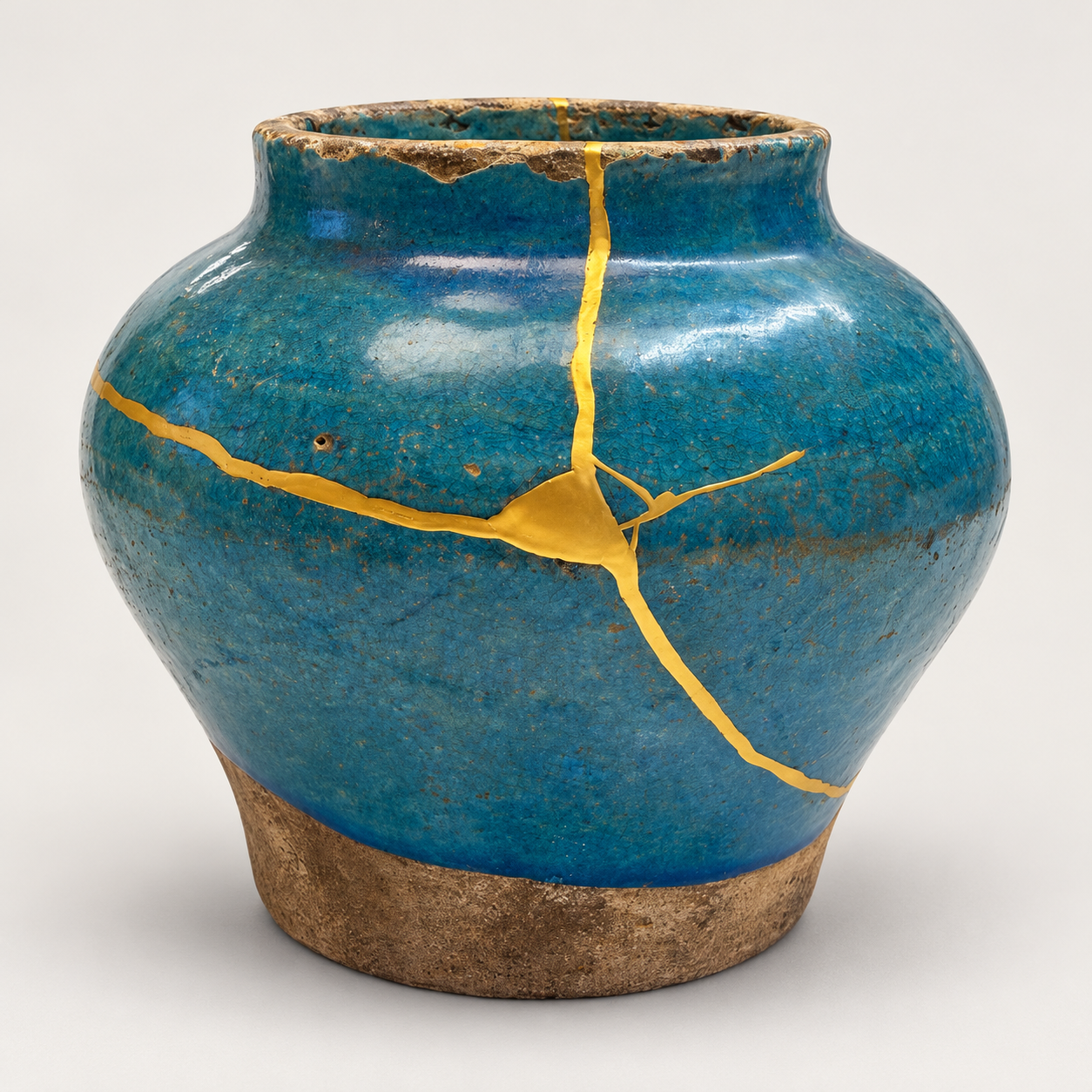
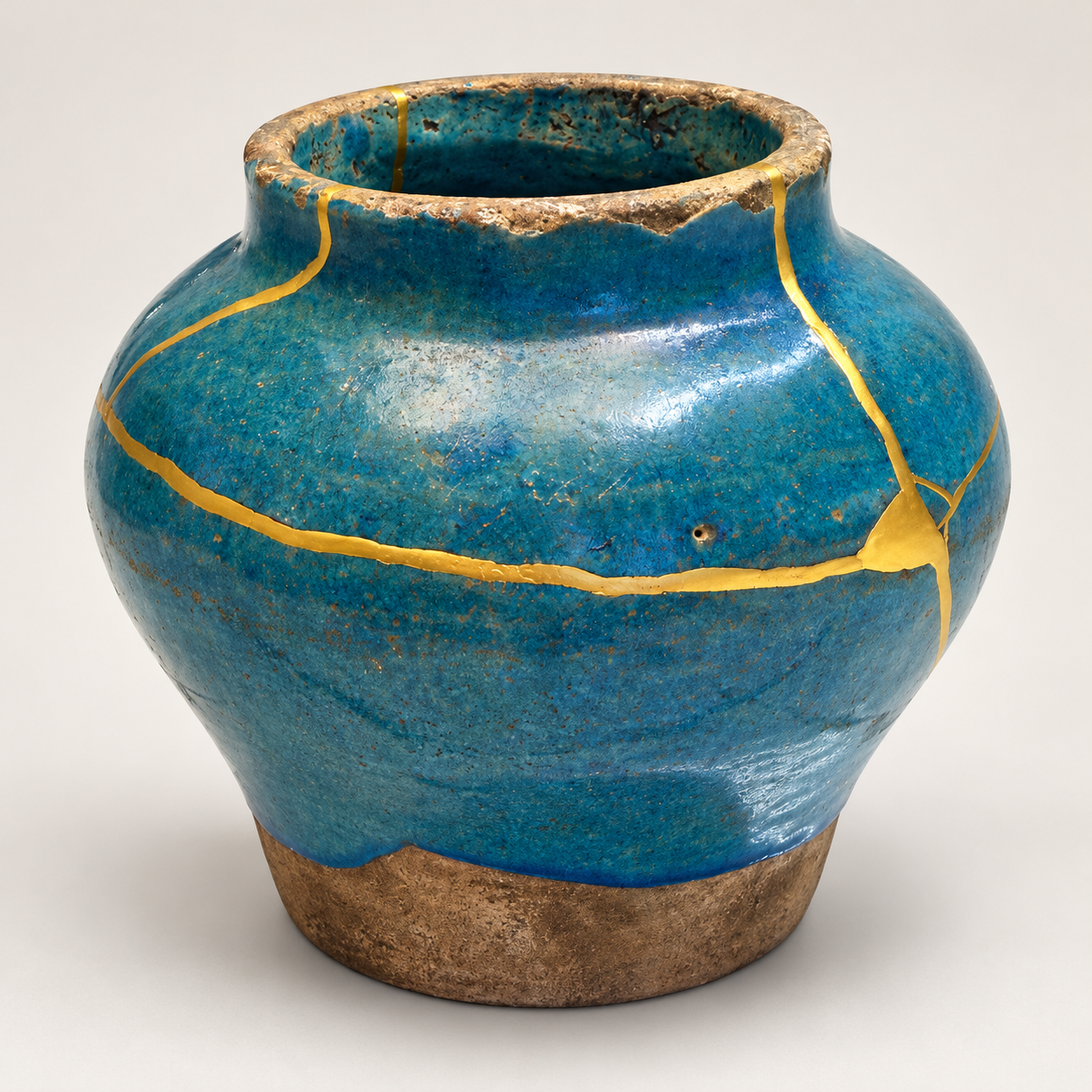
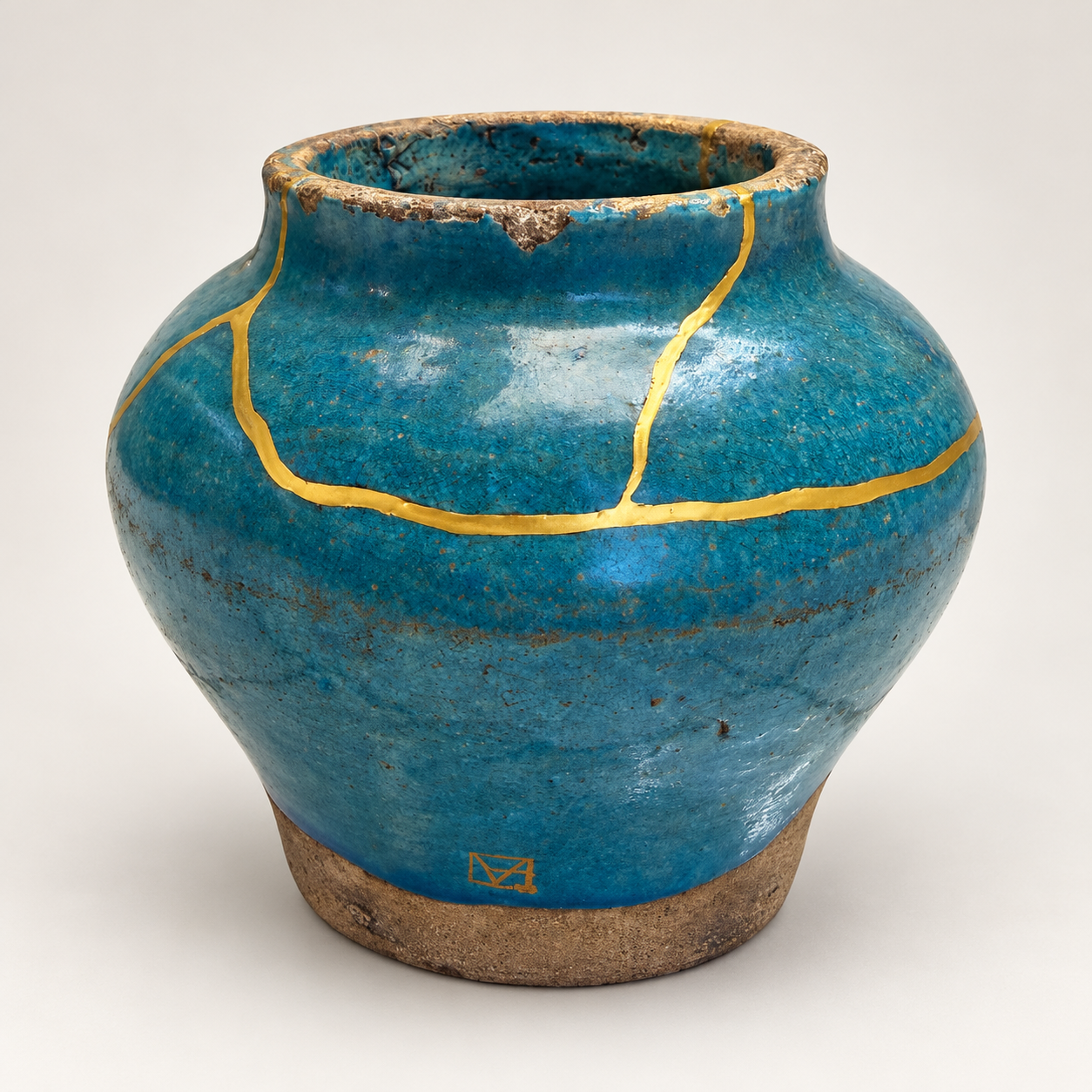
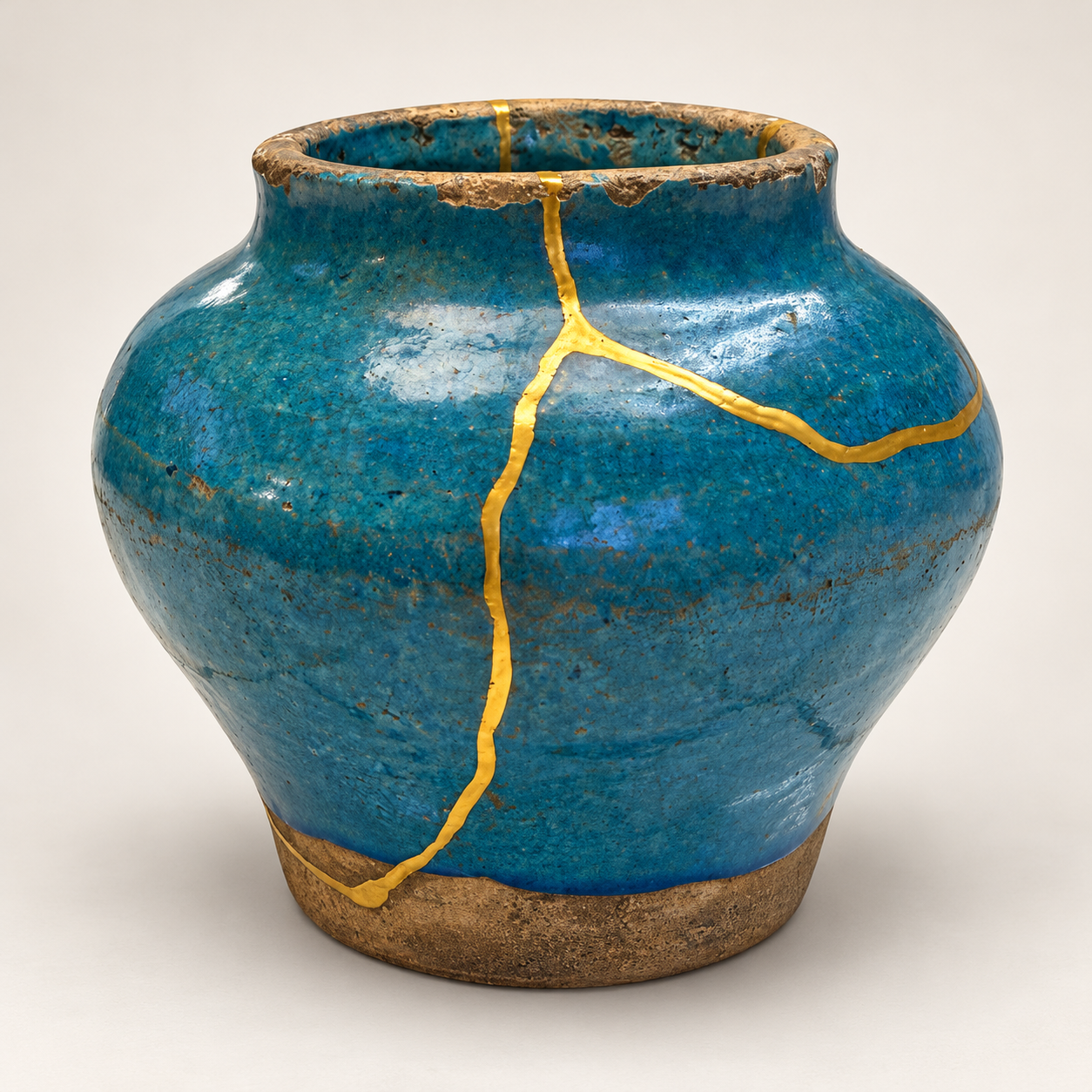
This small antique Chinese vase is distinguished by its generous rounded form and remarkable blue glaze, shifting between turquoise, deep blue and subtle earthy tones.
Its surface bears all the character of an old ceramic object: variations in the glaze, fine craquelure, firing irregularities, traces of wear and areas where the clay remains visible. These details are not concealed, but preserved as part of the vase’s material history and give the piece its particularly authentic presence.
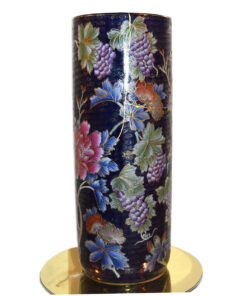
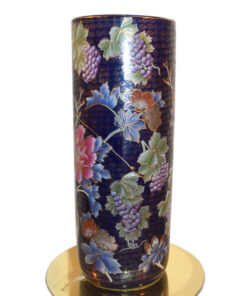
Once broken, the vase was carefully restored using the art of kintsugi. The golden repair follows the original fractures across the body, creating a strong contrast with the intense blue glaze. At the centre, a broader area of restoration forms a luminous focal point from which the golden lines seem to radiate.
The kintsugi does not erase the age of the object; it adds a new chapter to it. The irregularities of the antique ceramic, the traces left by time and the restored fractures coexist in a piece that brings together Chinese ceramic heritage and the Japanese art of repair.
A unique object with a strong sculptural presence despite its intimate scale.
Details
Antique Chinese ceramic vase, probably late 19th to early 20th century, circa 1880–1930
Deep blue glazed surface with natural variations, craquelure and traces of age
Traditional kintsugi with natural urushi lacquer and 24K gold
Height: 12 cm
Unique antique piece
Care: Handle gently and clean with a soft cloth. If used with water, empty after use and dry thoroughly. Avoid abrasive products, prolonged soaking and thermal shocks.
| Origin | Japan |
|---|---|
| Food Safe | Yes |
| Certificate of Authenticity | Provided |
| Color | Blue |
| Materials | 24 carats Gold, Ceramic, Urushi (Japanese lacquer) |